Oxygen System
The A320 is equipped with three oxygen systems:
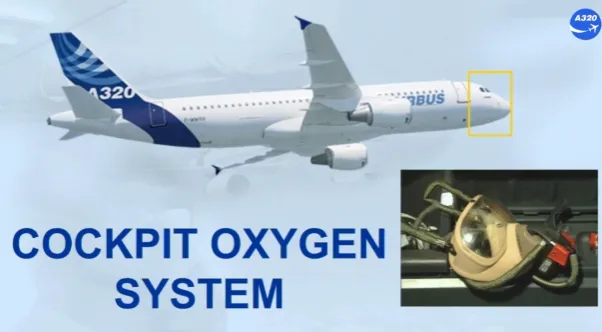
- A fixed cockpit oxygen system, with all the controls located in the cockpit
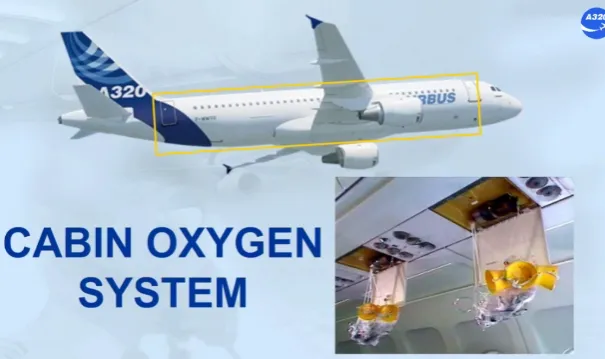
- A fixed cabin chemical oxygen system
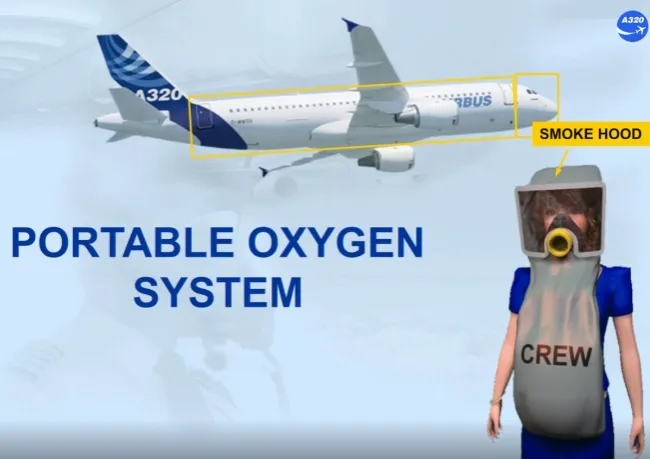
- A portable oxygen system in the cockpit and the cabin. (For utilization, refer to ATA 25 - Cabin system chapter).
Let’s start with the fixed cockpit system.
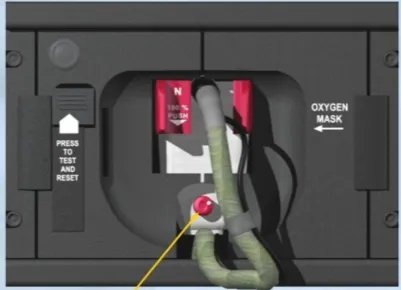
Depending on the number of observer seats, three or four full face quick donning masks are stowed in readily accessible boxes adjacent to the crew members seats (one at each seat).
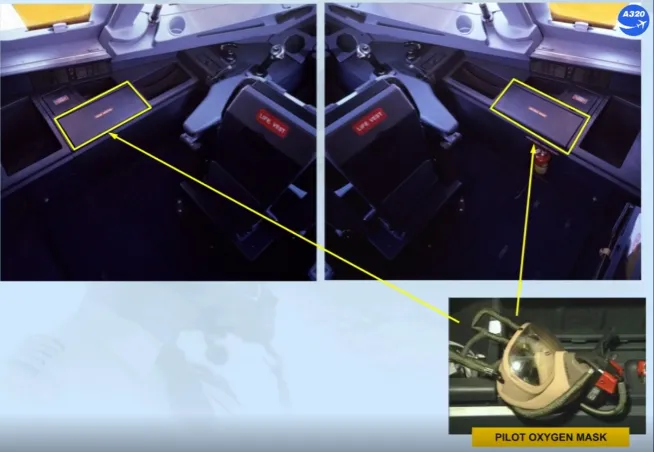
The oxygen mask is equipped with several controls and indicators that you will study in more detail in the operation module.
Let’s have a brief look at these controls:
- The red grips or release levers, when squeezed, enable the pilot to retrieve the mask from its container. It also causes the mask harness to inflate.
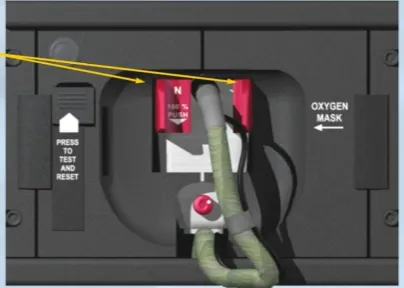
The blinker flow meter appears yellow when the oxygen is flowing.
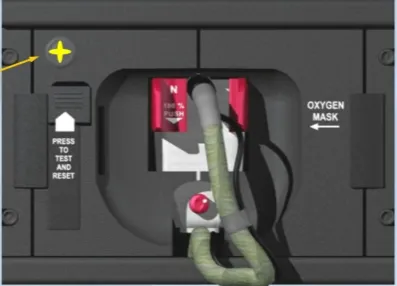
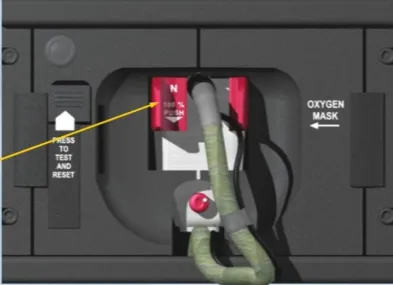
The N 100 % selector enables the pilot to select either a mixture of cabin air and oxygen or only pure oxygen.
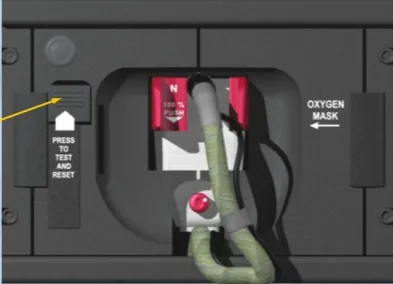
The TEST AND RESET control enables the test of the oxygen flow. Pressing the RESET control after the oxygen mask has been used cuts off the oxygen mask microphone.
The EMERGENCY pressure selector, when pressed, provides pressurized oxygen flow for a few seconds.
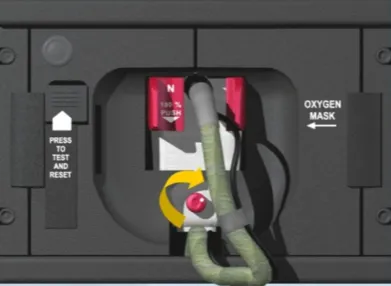
The created overpressure eliminates condensation and prevents smoke, smell or ashes from entering the mask.
Turned in the direction shown, it delivers permanent positive pressure to the mask.
The crew:
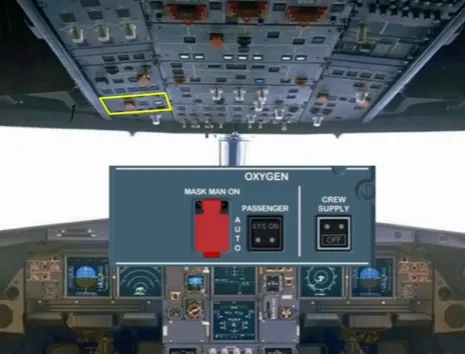
- Controls the oxygen system for the cockpit and the cabin through the OXYGEN panel located on the overhead panel …
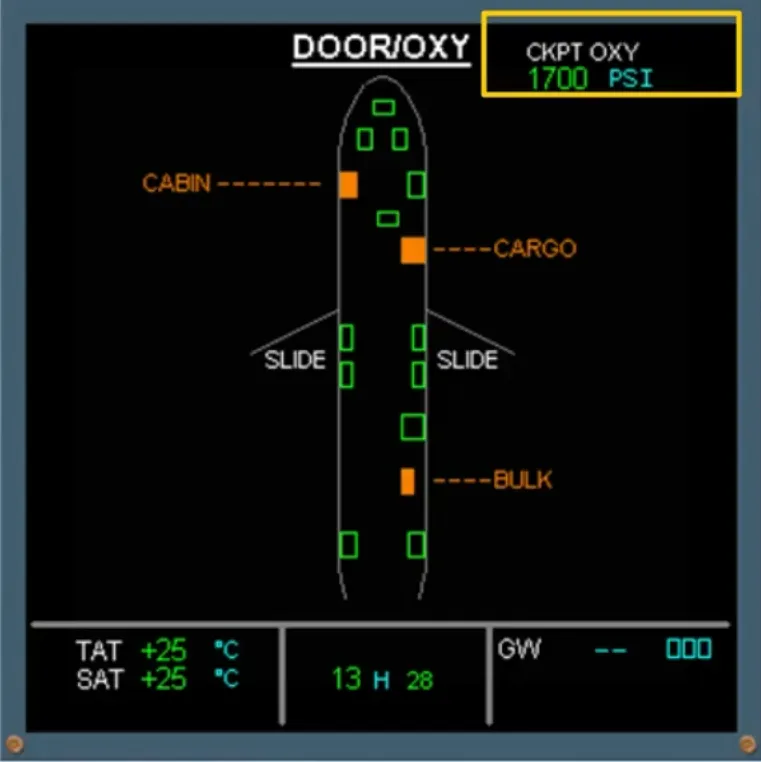
- And monitors the cockpit oxygen system on the ECAM DOOR page. The corresponding indications are displayed in the upper right corner and are color-coded to reflect the system status.
The fixed chemical oxygen system in the cabin operates in case of cabin depressurization.
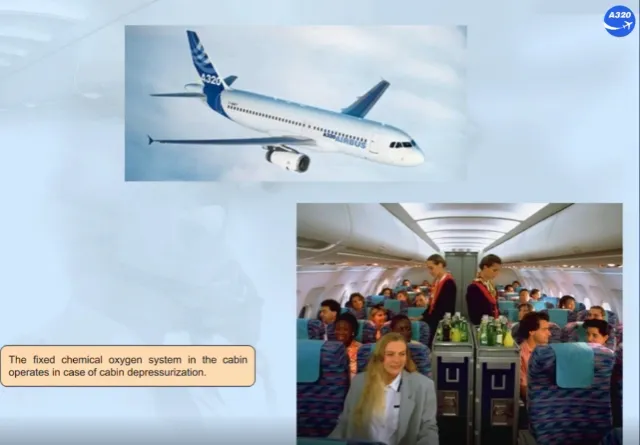
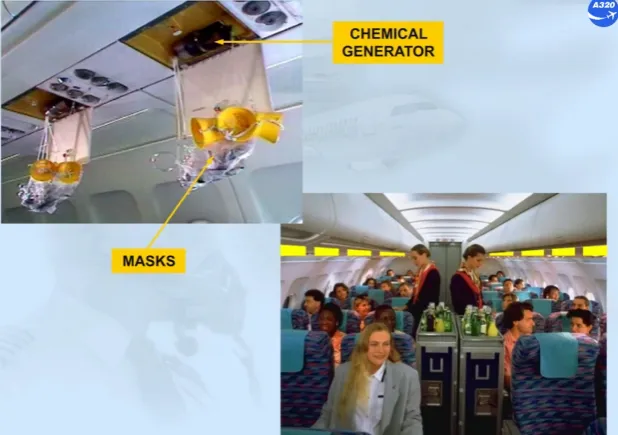
This system has two to four masks, and chemical oxygen generators.
They are installed above the passenger seats, in the lavatories, in each galley, and at each cabin attendant station.
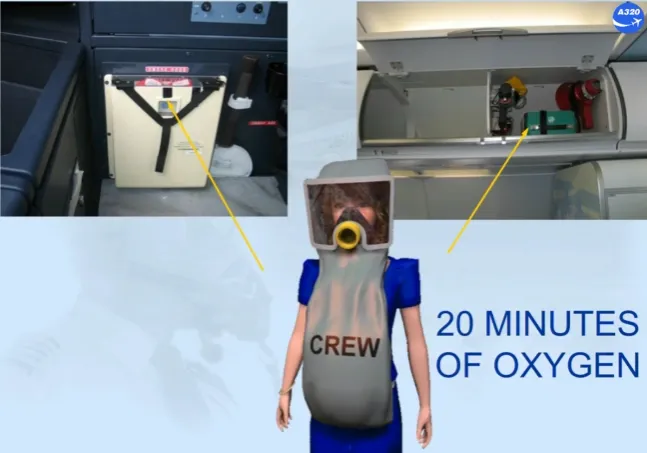
The portable oxygen system has one smoke hood in the cockpit, and several in the cabin. This equipment protects the eyes and respiratory system and provides at least 20 min of breathing time.
You will see the use of this smoke hood in more detail in the cabin systems chapter.
Module completed