Fuel Operation
During the walk around, you must check several items which are part of the fuel system.
These items are not major components but a check of their condition is very important.
Fuel can be measured manually by the magnetic fuel level indicators installed as follows:
- One under the center fuselage
- Four under each wing inner tank
- One under each wing outer tank.
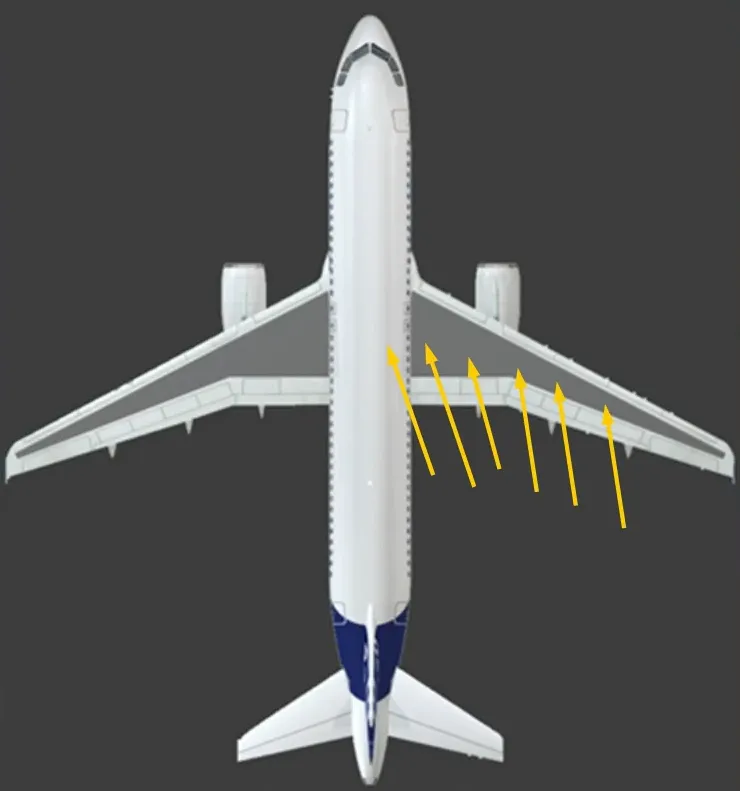
We are looking at a magnetic fuel level indicator under the right wing inner tank. It should be flush with the aircraft surface.
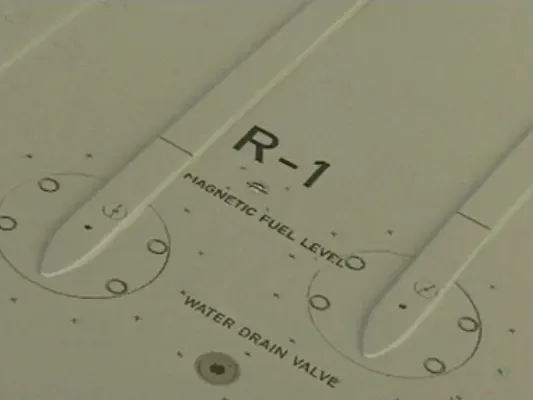
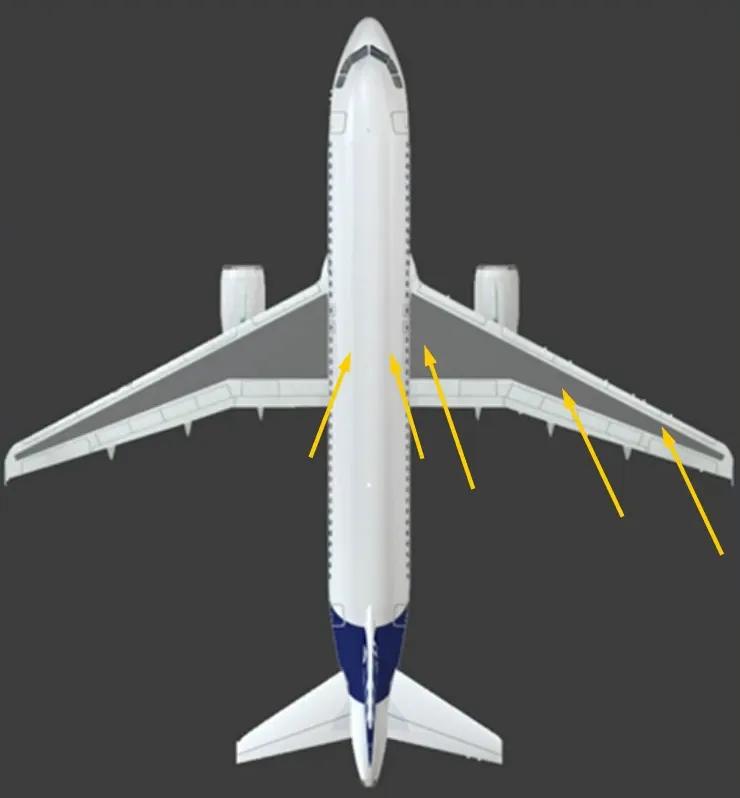
Water drain valves are installed as follows:
- Two under the center fuselage
- One under each wing inner tank
- One under each wing outer tank
- One under each wing surge tank.
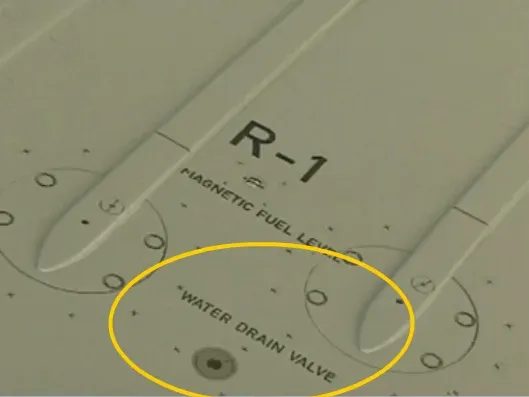
We are looking at the water drain valve in the right inner tank. You should check that there is no water leaking from the valve.
If there is a leak call maintenance.
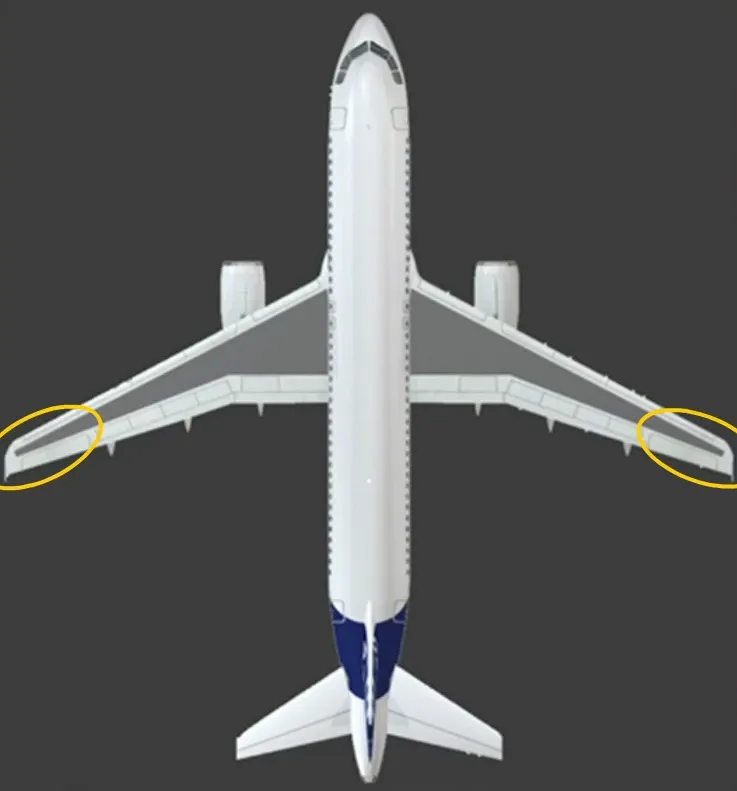
A surge tank is connected to the outer tank in each wing tip. These small tanks protect the system against overpressure and thermal expansion.
You cannot monitor or control surge tanks from the cockpit.
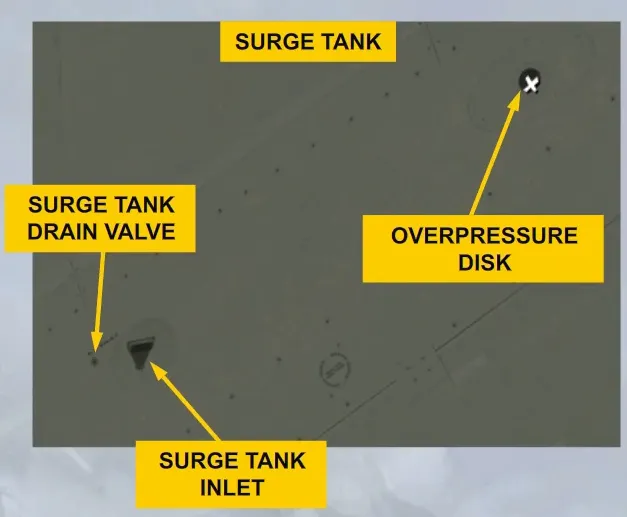
The surge tank inlet should be clear of any blockage. The fuel ventilation overpressure disk should be intact.
Note: The disk is intact when a white painted cross is in view.
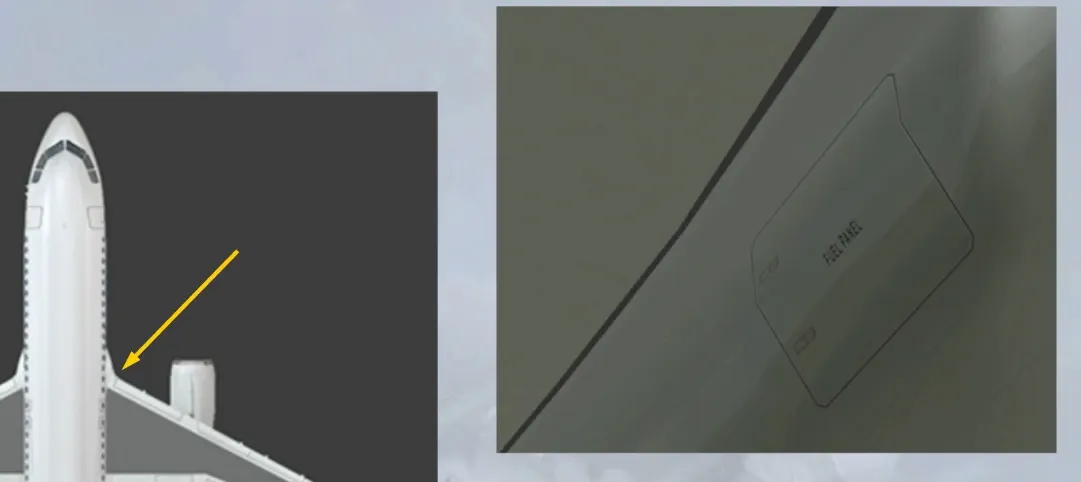
A refuel panel is located on the fuselage side beneath the right wing.
You should check that the REFUEL panel access door is closed.
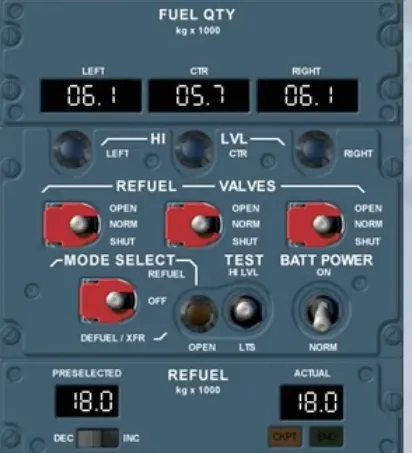
A single refueling point is installed under the right wing.
You should check that the refuel coupling door is closed.
Note: Another refueling point can be installed under the left wing as an option.
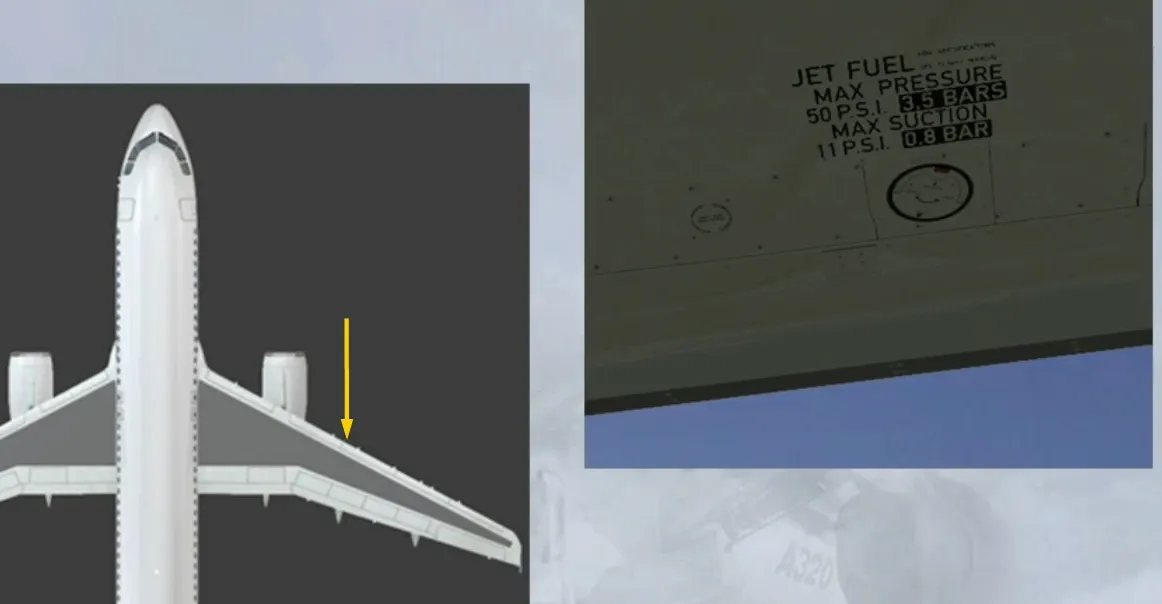
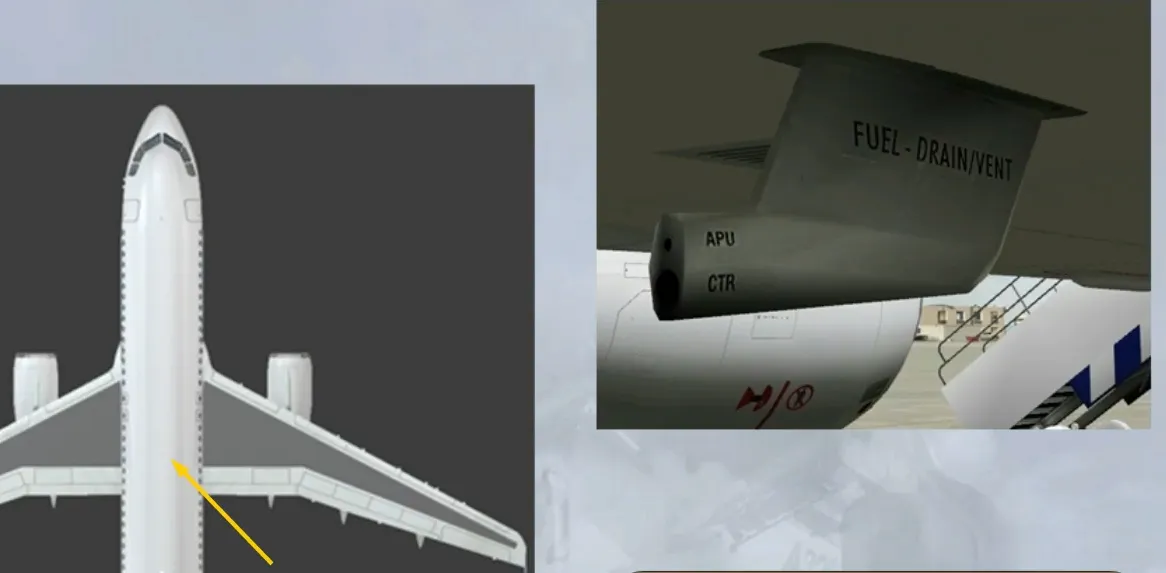
There is also a shroud drain mast, which drains fuel that could leak from the system.
You should check that there is no fuel leaking from the mast.
The items related to the fuel system during the walk around have all been seen.
We will now discuss items related to the fuel system that you will encounter during cockpit preparation.
To better illustrate what occurs we will select the ECAM FUEL page for you.
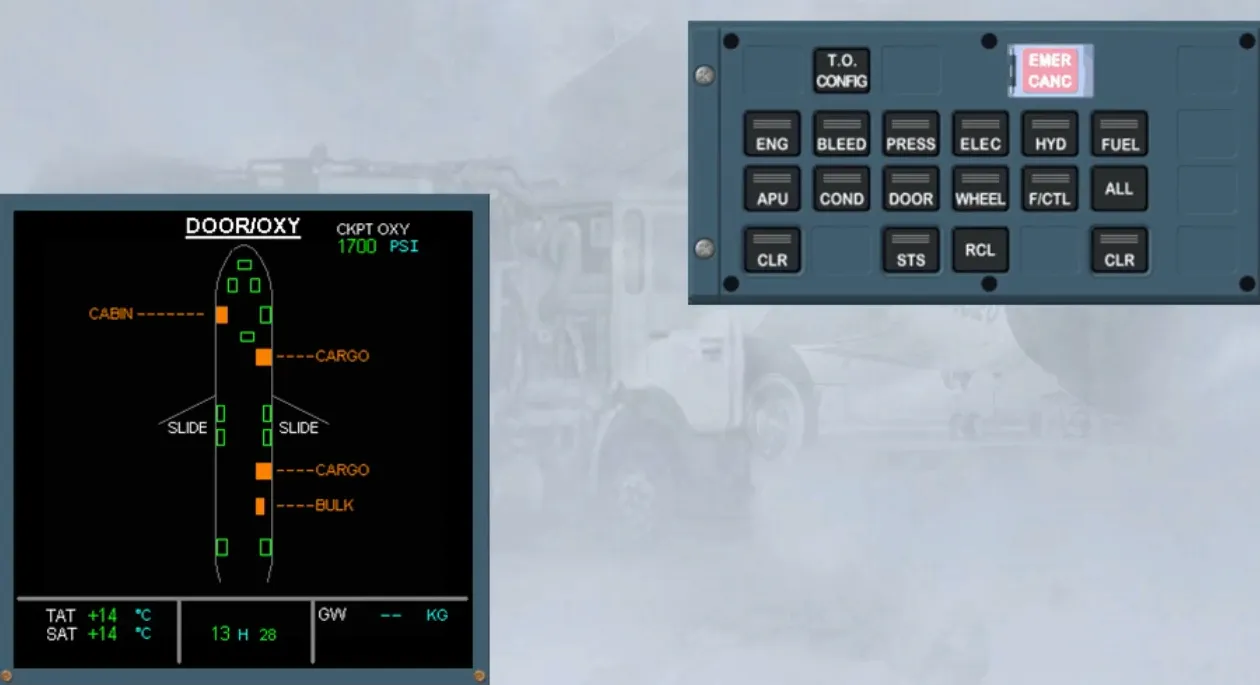
With the pumps in the OFF position, the ECAM shows the pumps cross-line amber.
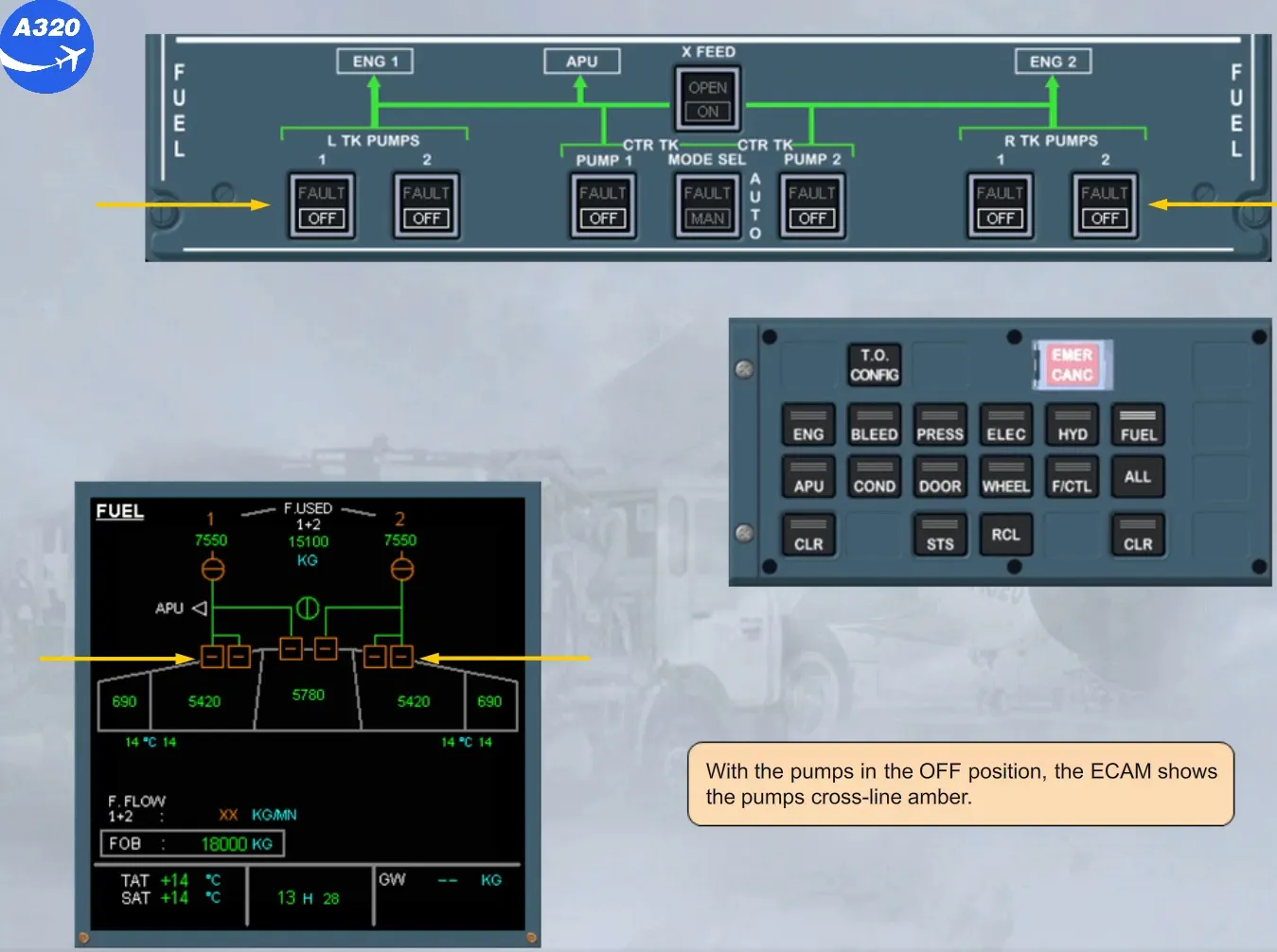
During cockpit preparation, all white lights in the cockpit must be extinguished.
Switch on left tank pump 1 and observe the ECAM indications.
Left tank pump 1 on the ECAM FUEL page is in-line green, indicating that the pump is running.

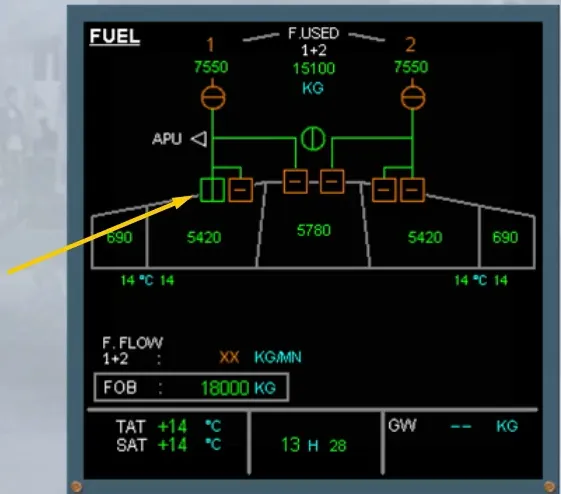
We have pressed the L TK PUMP 2 pb-sw for you. Left tank pump 2 is now also running.
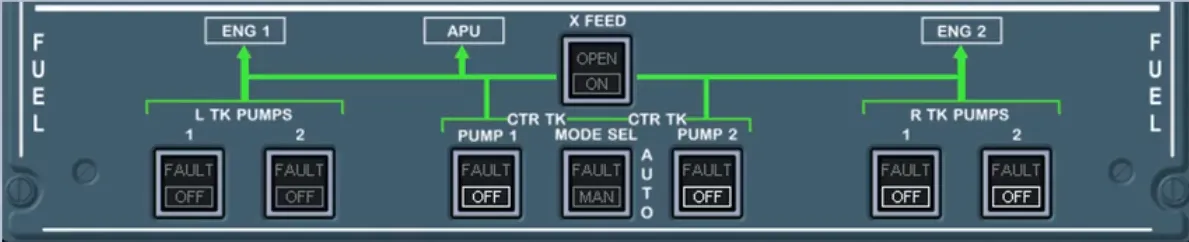
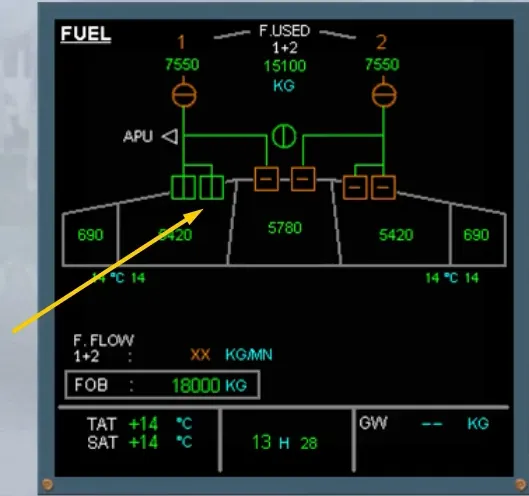
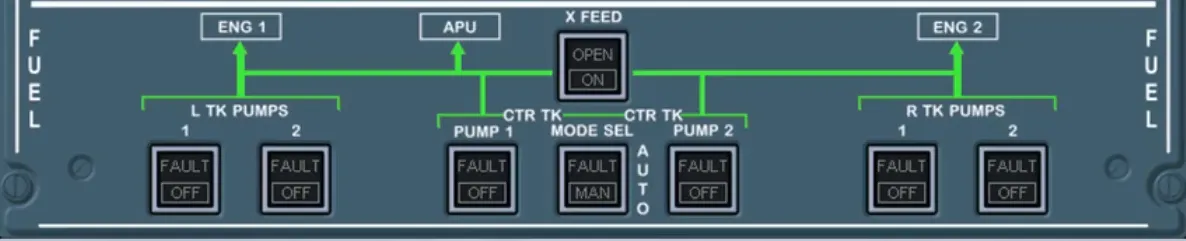
All the pumps are now running.
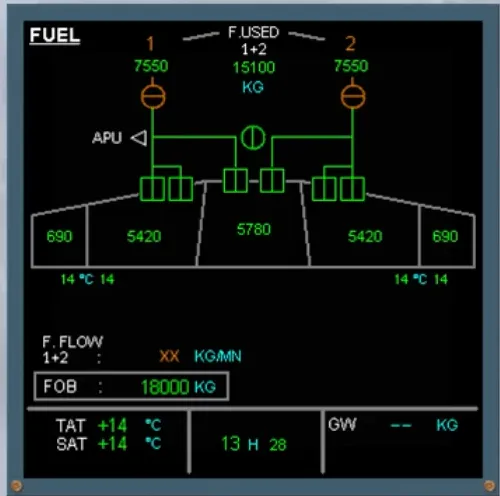
Before you continue, you observe a message on the EWD.
The message “REFUELG” indicates that the refuel control panel door is open.
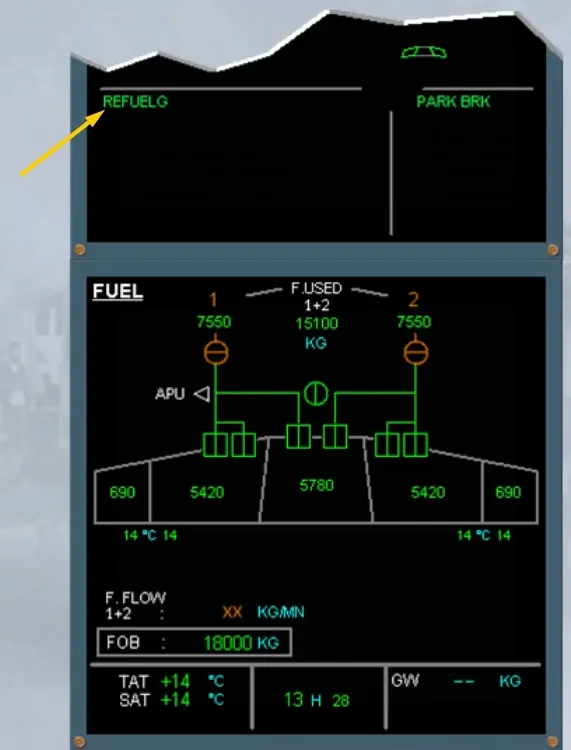
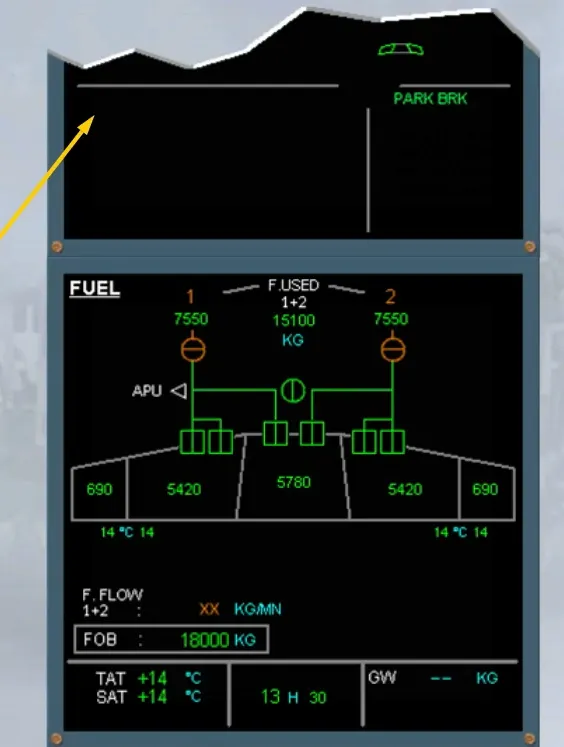
A few minutes later you observe that the refueling message on the EWD has disappeared, indicating that refueling is complete and the refueling control panel door is closed.
Now let’s continue the preflight by inserting the fuel weight in the MCDU.
We have typed the fuel weight in the scratch pad for you.
Note: You can insert the fuel weight in the MCDU even if the refueling is in progress.
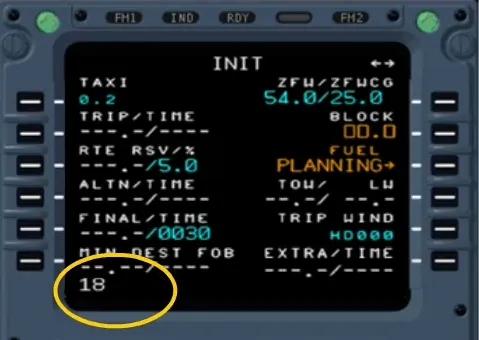
The typed fuel weight can now be inserted in the MCDU by pressing the LSK2R.
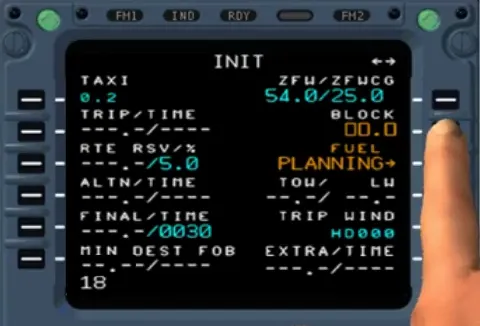
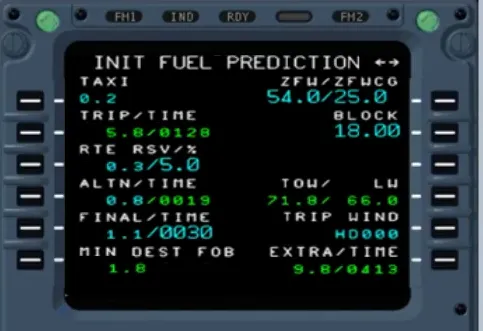
Then, you have to check that the estimated data:
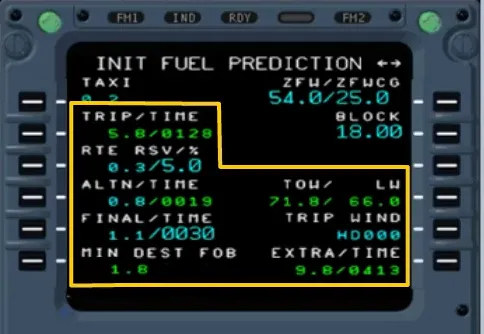
- The TRIP fuel
- The RTE RSV fuel
- The ALTN fuel
- The FINAL fuel
- The MIN DEST FOB
- The EXTRA fuel
- The TOW and the LW
correspond to the data on your computerized flight plan.
Note: The minimum fuel quantity for take off is 1500 kg.
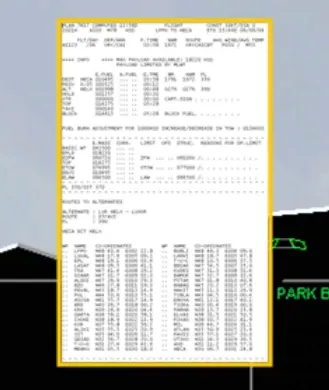
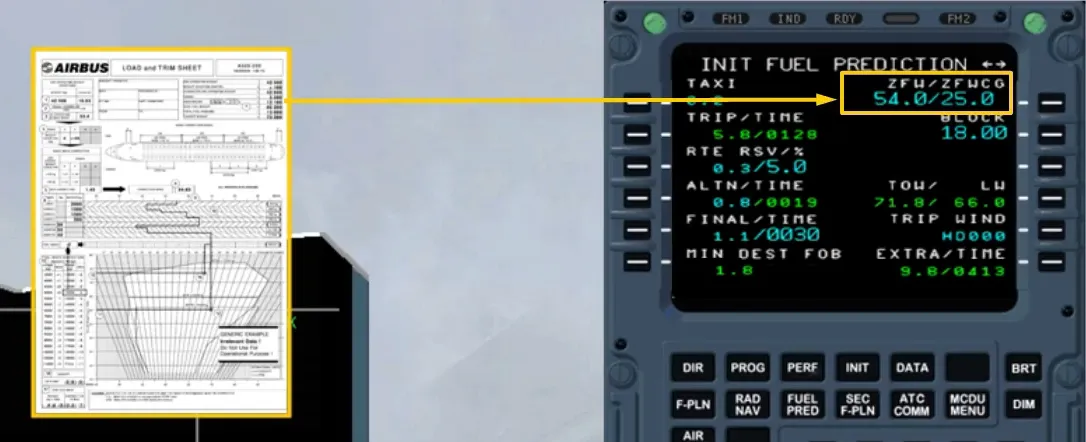
Then, you have to check that the entered data correspond to the data from the Load and Trim Sheet.
For that, compare the ZFWCG/ZFW with the previously-entered data and adjust, if necessary.
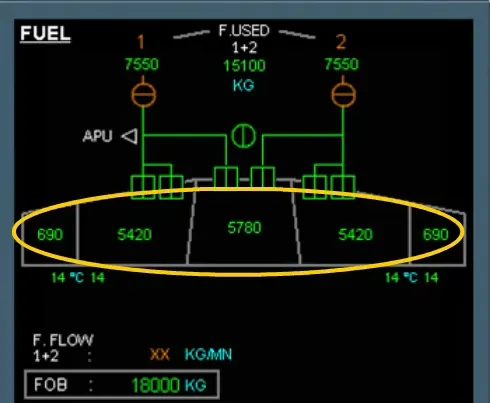
Also verify the fuel distribution in the different tanks.
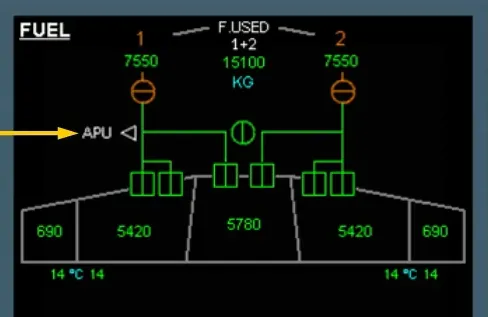
It is now time to start the APU.
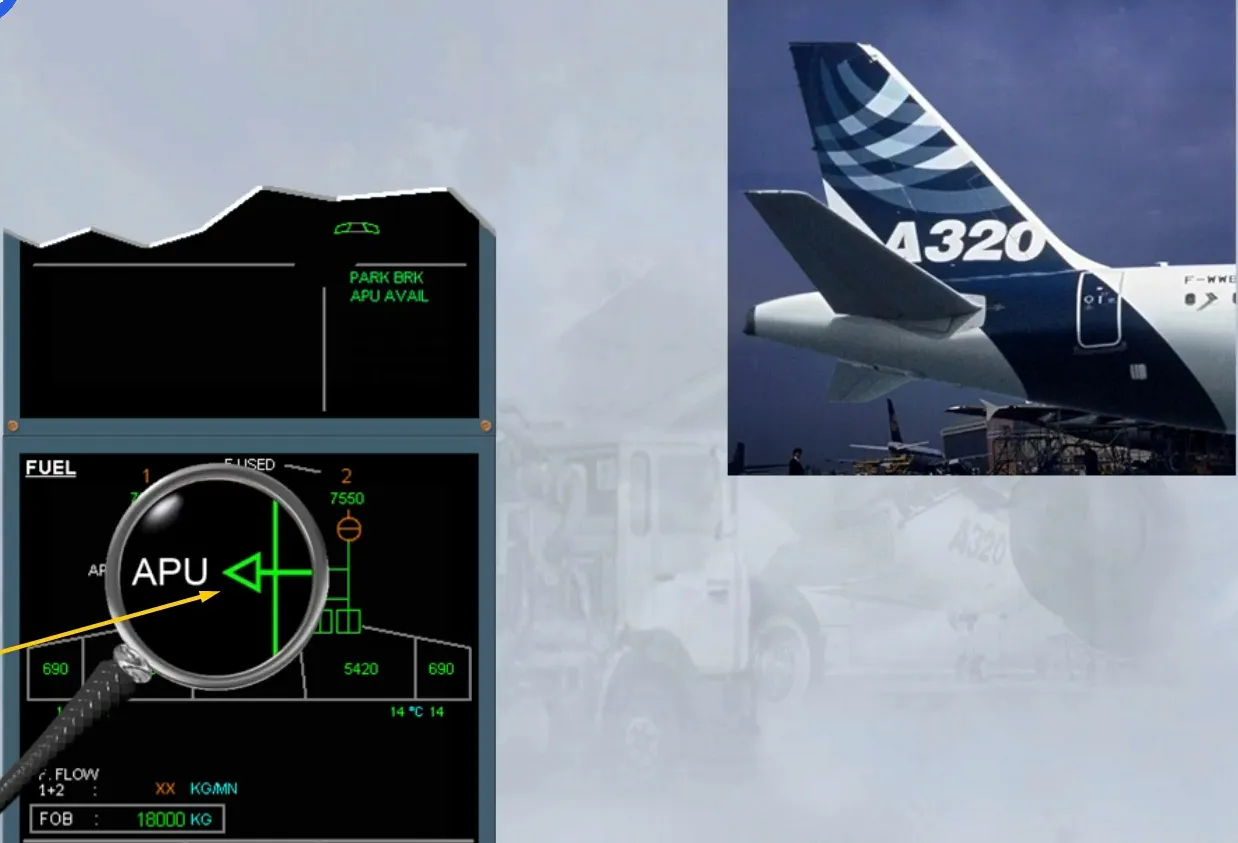
Before starting it, notice that the APU triangle is white. It is to indicate that the APU valve is closed.
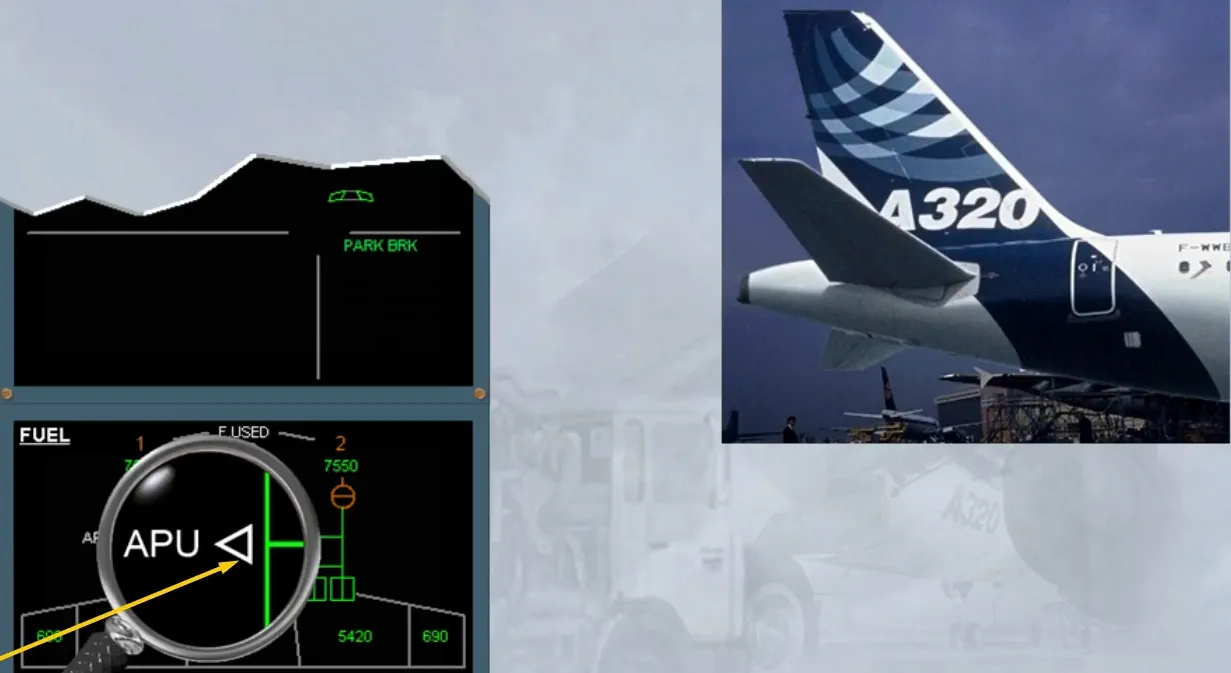
We have started the APU.
On the ECAM FUEL page, you can see that the triangle is now green, and linked to the left hand circuit.
The APU valve is open and the APU is running. Also, as the center tank pumps are running, the left center tank pump feeds the APU fuel line.
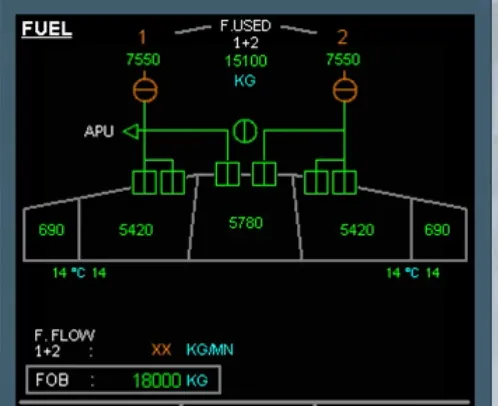
The items related to the fuel system during cockpit preparation have all been seen.
We will now discuss items related to the fuel system that you will encounter during engine start.
The indications and starting procedures are the same for both engines.
In our example we will start engine 2 first.
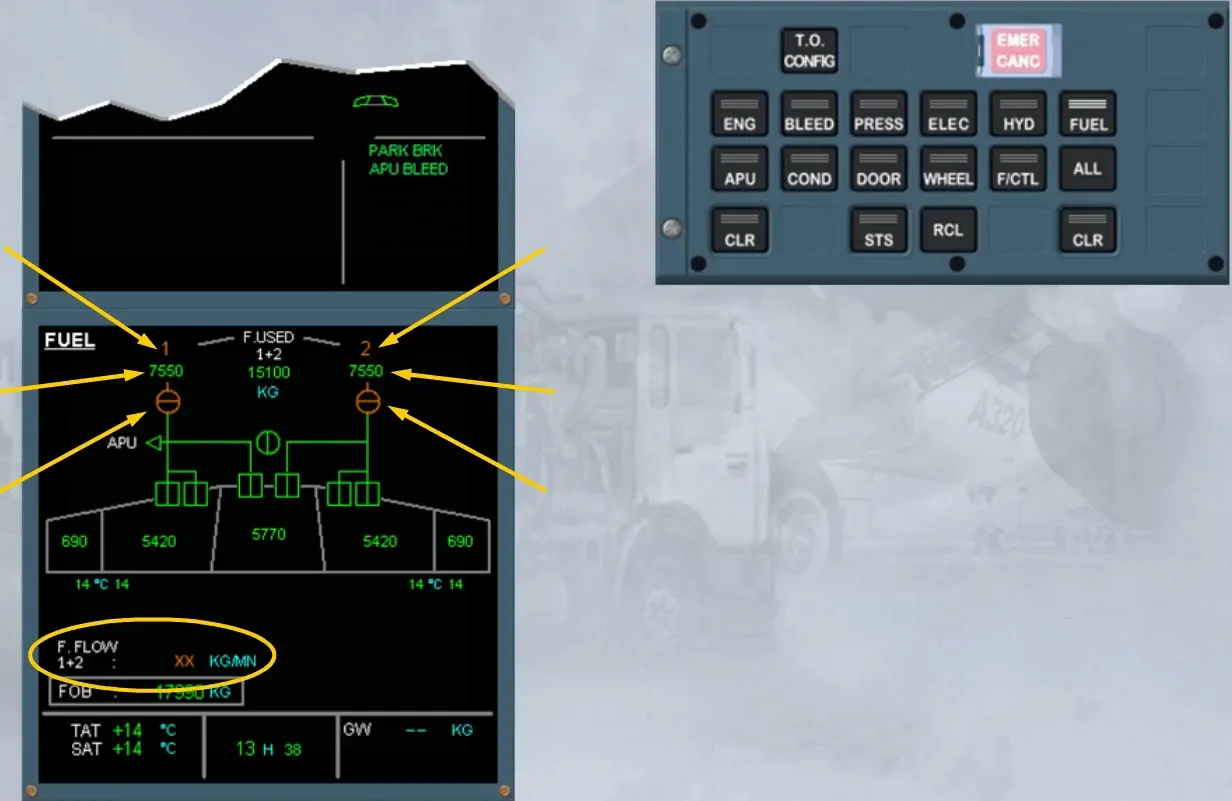
Before we start the engine observe the following:
- The engine LP valves are cross-line amber to indicate closure
- The fuel used quantities remain from the previous flight
- Engine identification numbers are amber (This is because the engines are not running)
- The optional Fuel.FLOW 1 + 2 indicates amber crosses.
Engine 2 is starting, observe:
- The LP valve is in-line green
- The fuel used indication automatically resets to 0
- The fuel flow starts
- The engine identification number 2 changes to white
- The Gross Weight (GW) has now appeared.
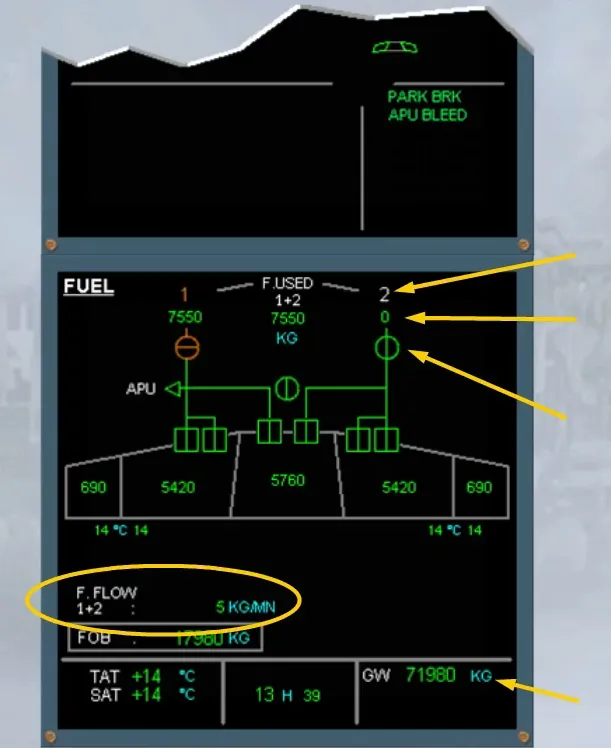
Engine 1 is starting, observe:
- The LP valve is in-line green
- The fuel used indication automatically resets to 0
- The engine identification number 1 changes to white.
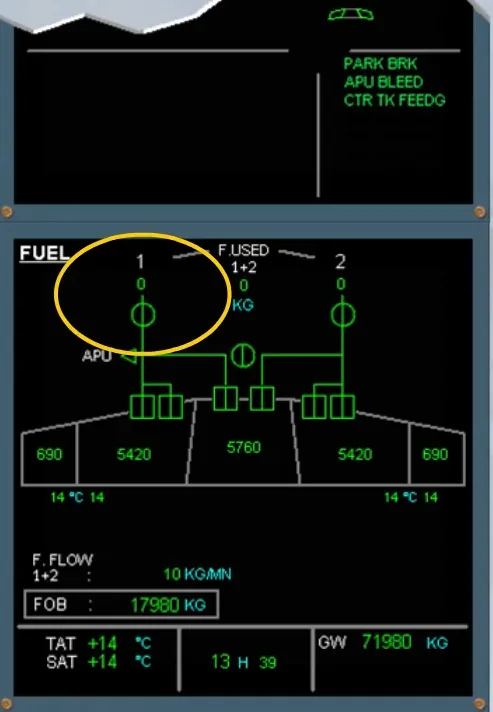
The message “CTR TK FEEDG” has appeared on the EWD. This indicates that the center tank pumps are feeding the engines.
Note: As the inner tank pumps have a sequence valve, the center tank pumps when they are also running deliver fuel preferentially, as long as slats are retracted,
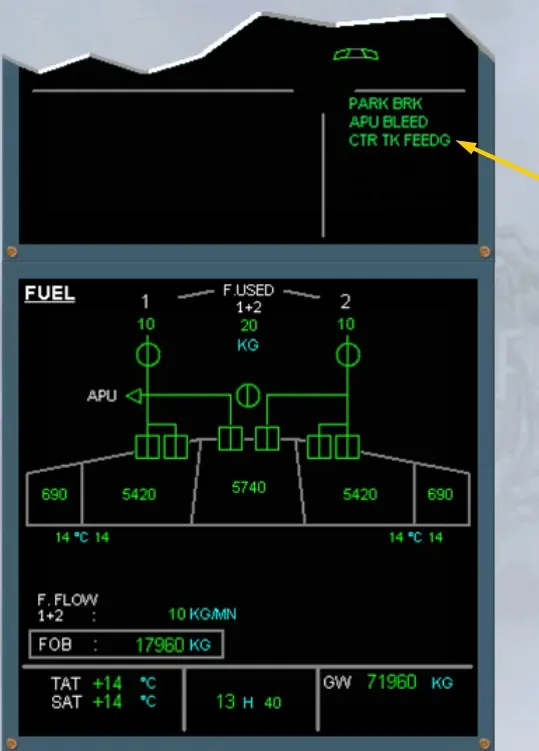
The center tank pumps automatically stop at slats extension.
Then it is time to stop the APU if it is not required during taxi and take off.
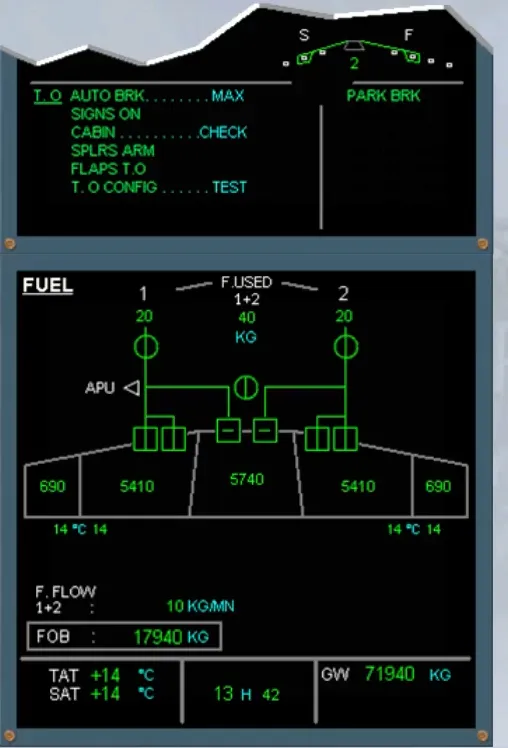
We will now discuss items related to the fuel system that you will encounter during normal climb, cruise and descent.
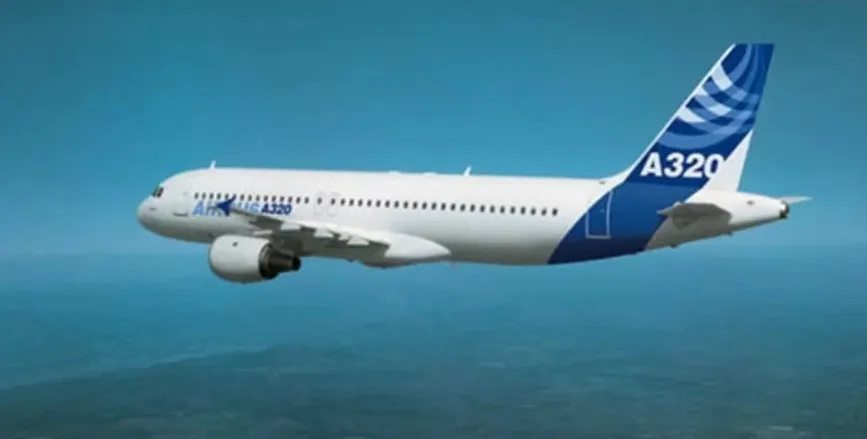
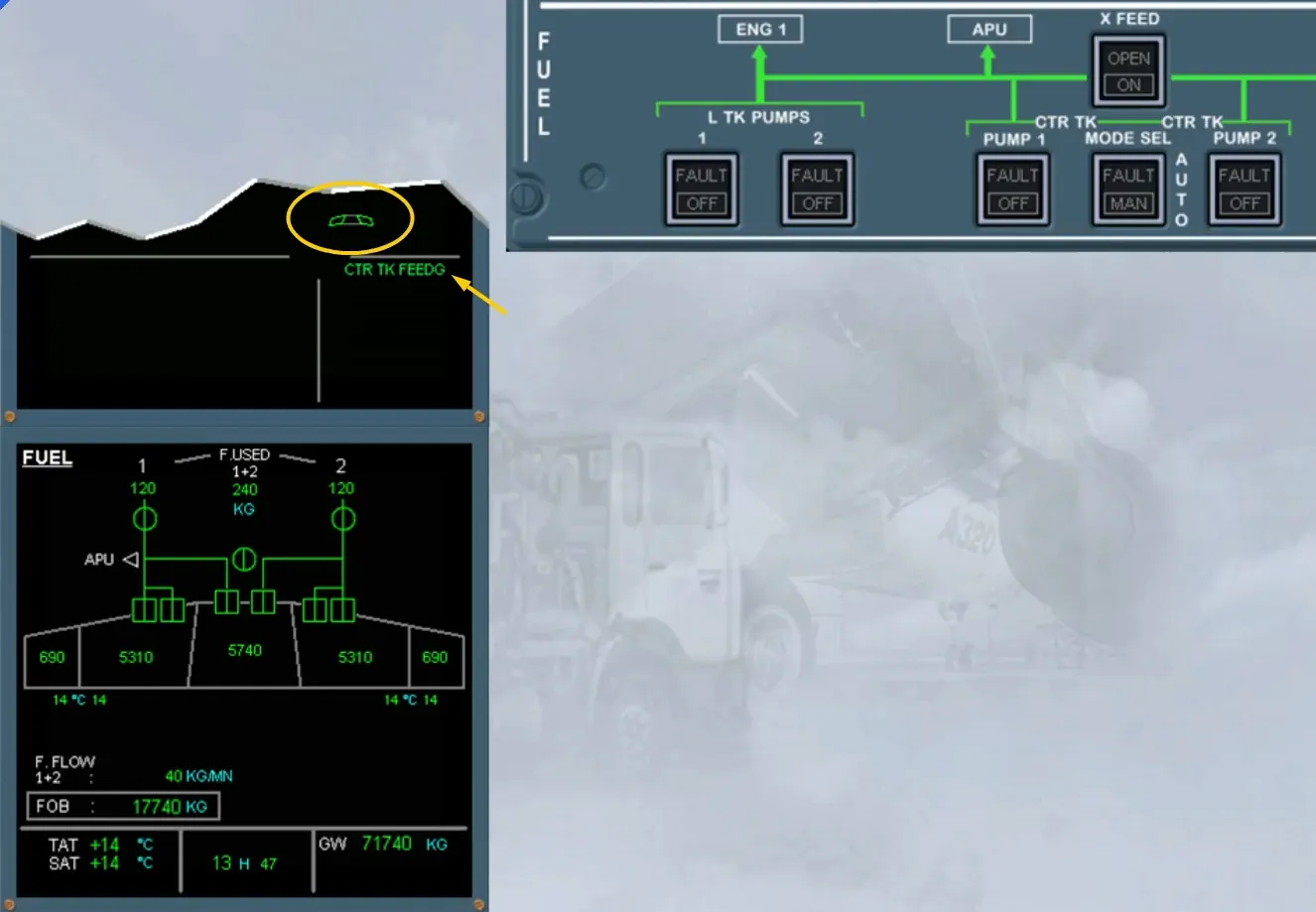
You are in climb, the slats are now retracted.
The CTR TK FEEDG message reappears indicating that the center tank pumps are now feeding the engines.
Note: The center tank must be emptied first.
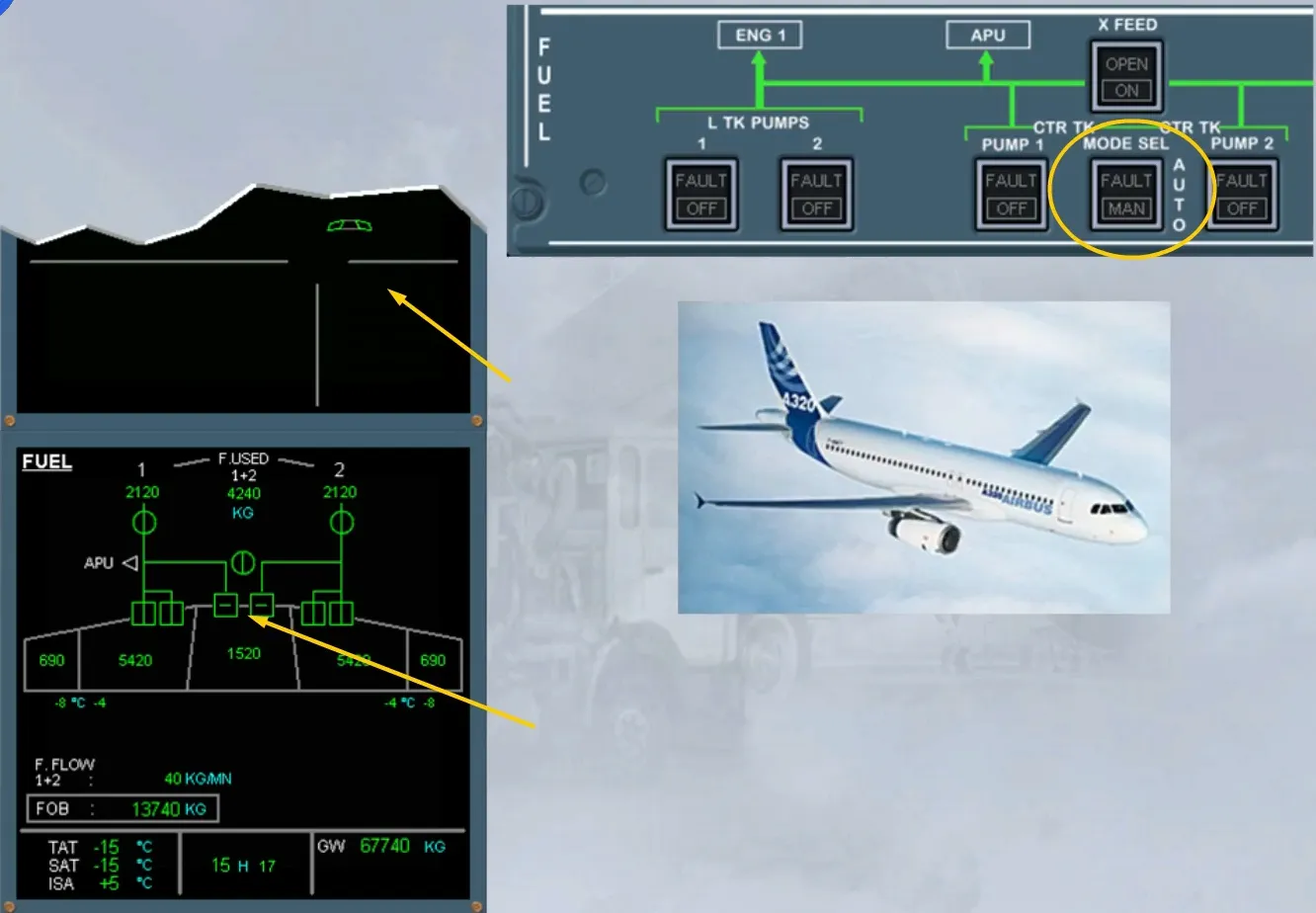
You are now in cruise.
Notice the CTR TK FEEDG message has again disappeared indicating that the center tank pumps have stopped. However the center tank is not empty and another automatic function has occurred.
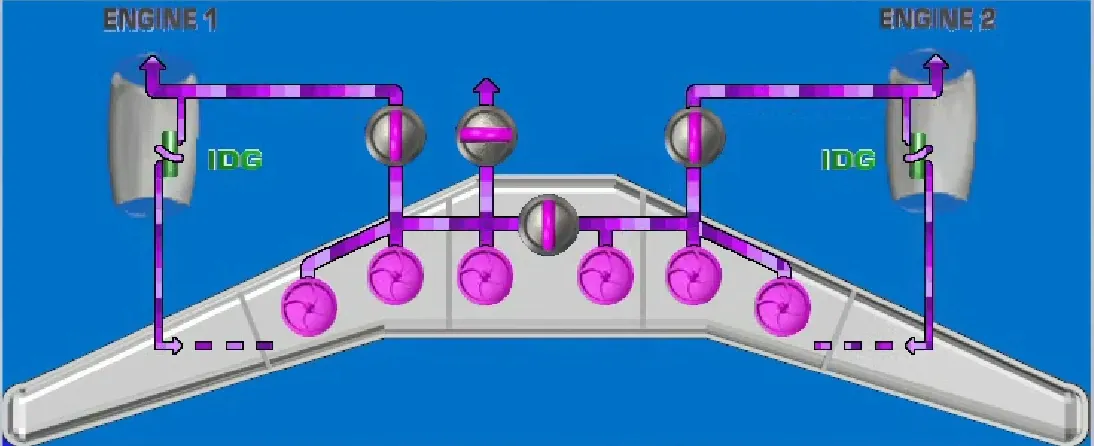
To explain why, we must look at the IDG cooling fuel recirculation system.
Some of the fuel supplied to each engine is used to cool the oil system of the Integrated Drive Generator (IDG), then returns to the related outer tank. If the outer tank is already full, it overflows to the related inner tank.
When the inner tank reaches the high level, the related center tank pump is automatically stopped. So, the engine is fed by the inner tank until it consumes 500 kg, and so on.
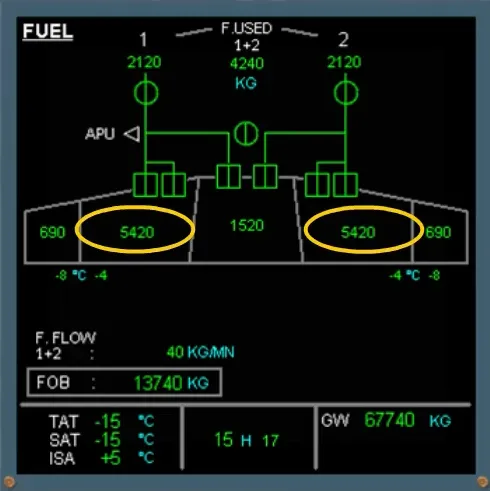
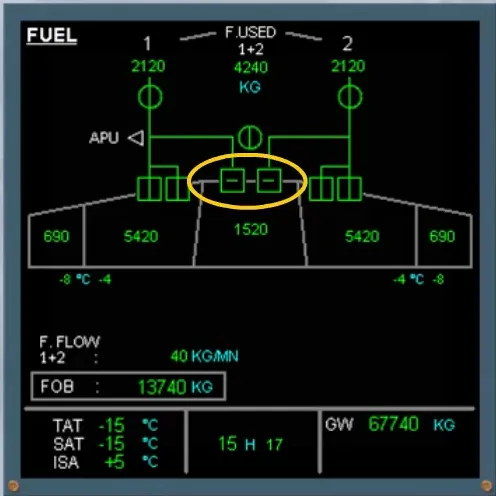
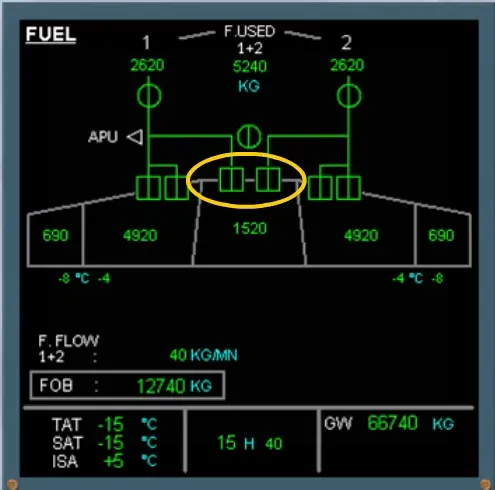
Then, 5 minutes after the center tank has been emptied, the center tank pumps are automatically stopped.
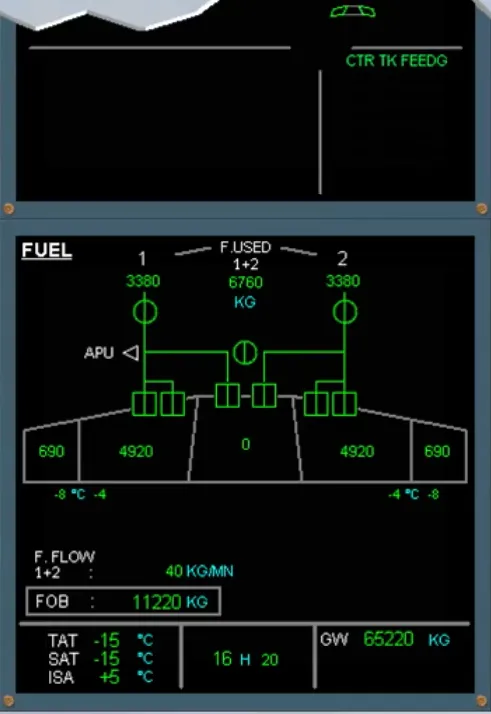
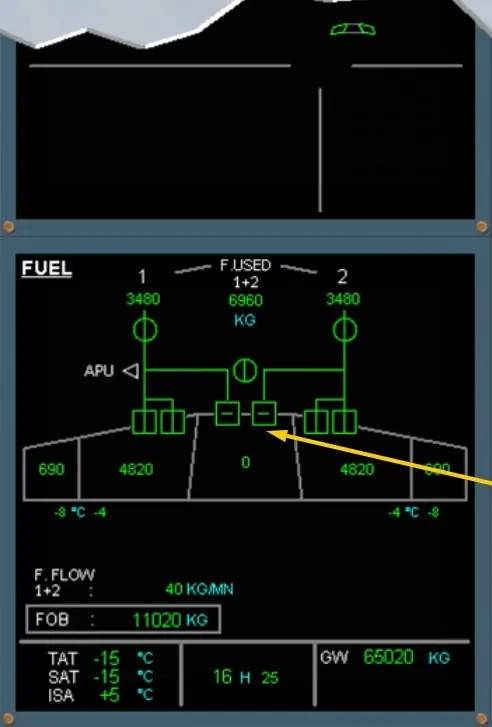
You are in descent.
To better illustrate the remaining indications, we will keep the ECAM FUEL page displayed.
Let’s see what happens when the inner tanks reach a low level.
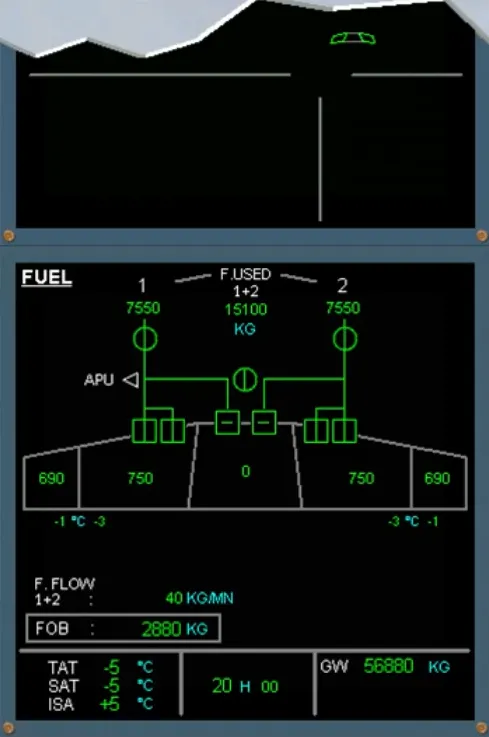
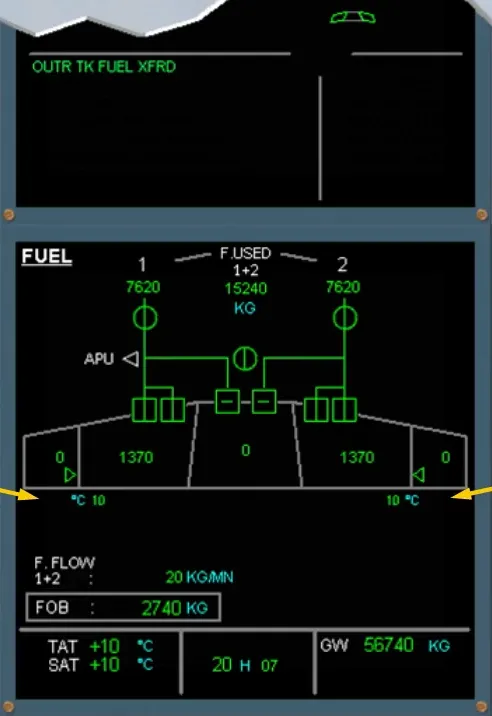
When either inner tank reaches a low level limit, the transfer valves on both sides simultaneously open enabling the transfer of fuel from the outer to the inner tanks.
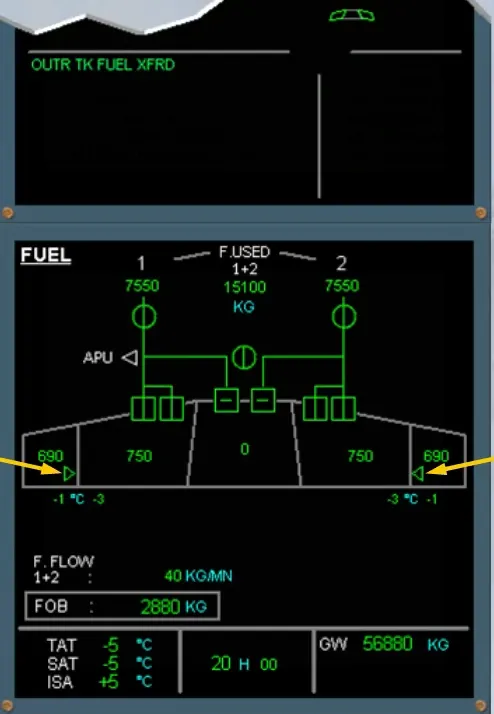
When at least one transfer valve is open, the message OUTER TK FUEL XFRD is displayed on the EWD.
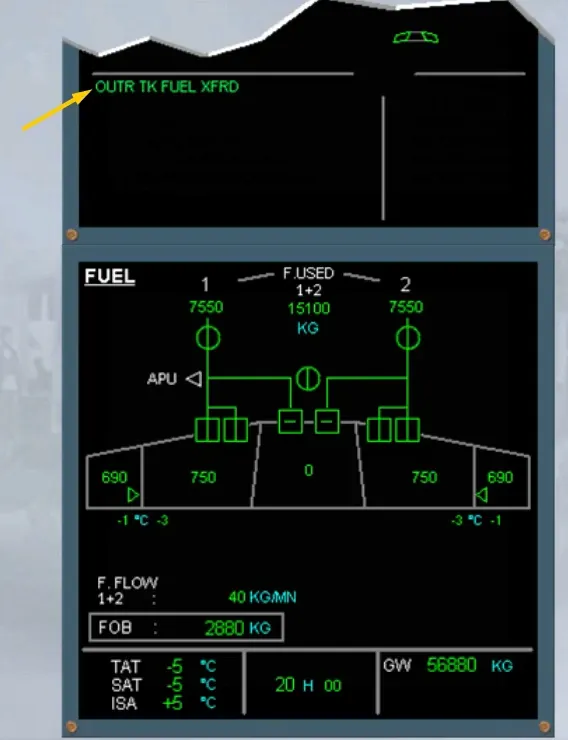
As you can see, the fuel is transferring until the outer tanks become empty.
Note: When the outer tank is empty, the related fuel tank temperature is not displayed.
The items related to the fuel system during climb, cruise and descent have all been seen.
We will now discuss items related to the fuel system that you will encounter post flight.
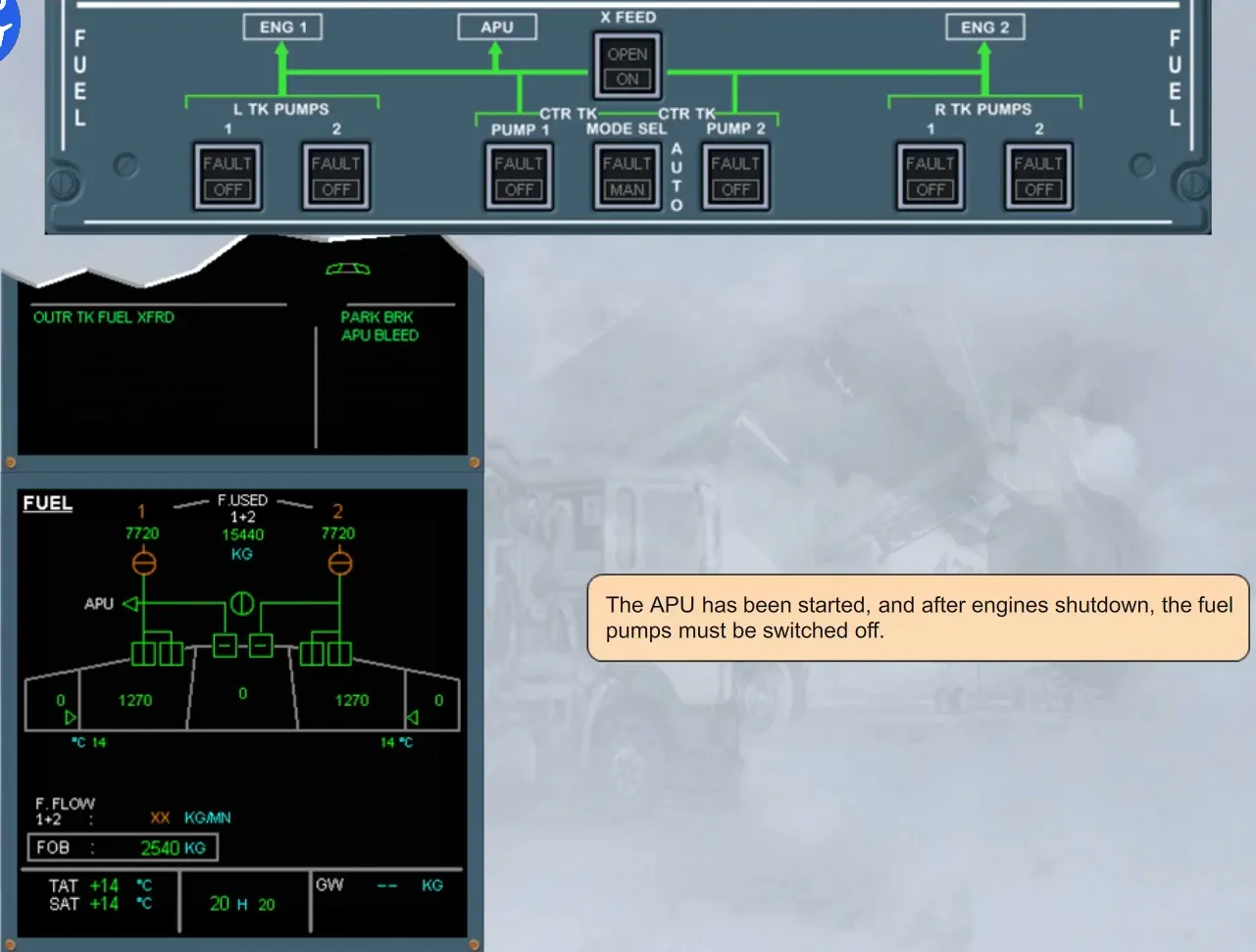
The APU has been started, and after engines shutdown, the fuel pumps must be switched off.
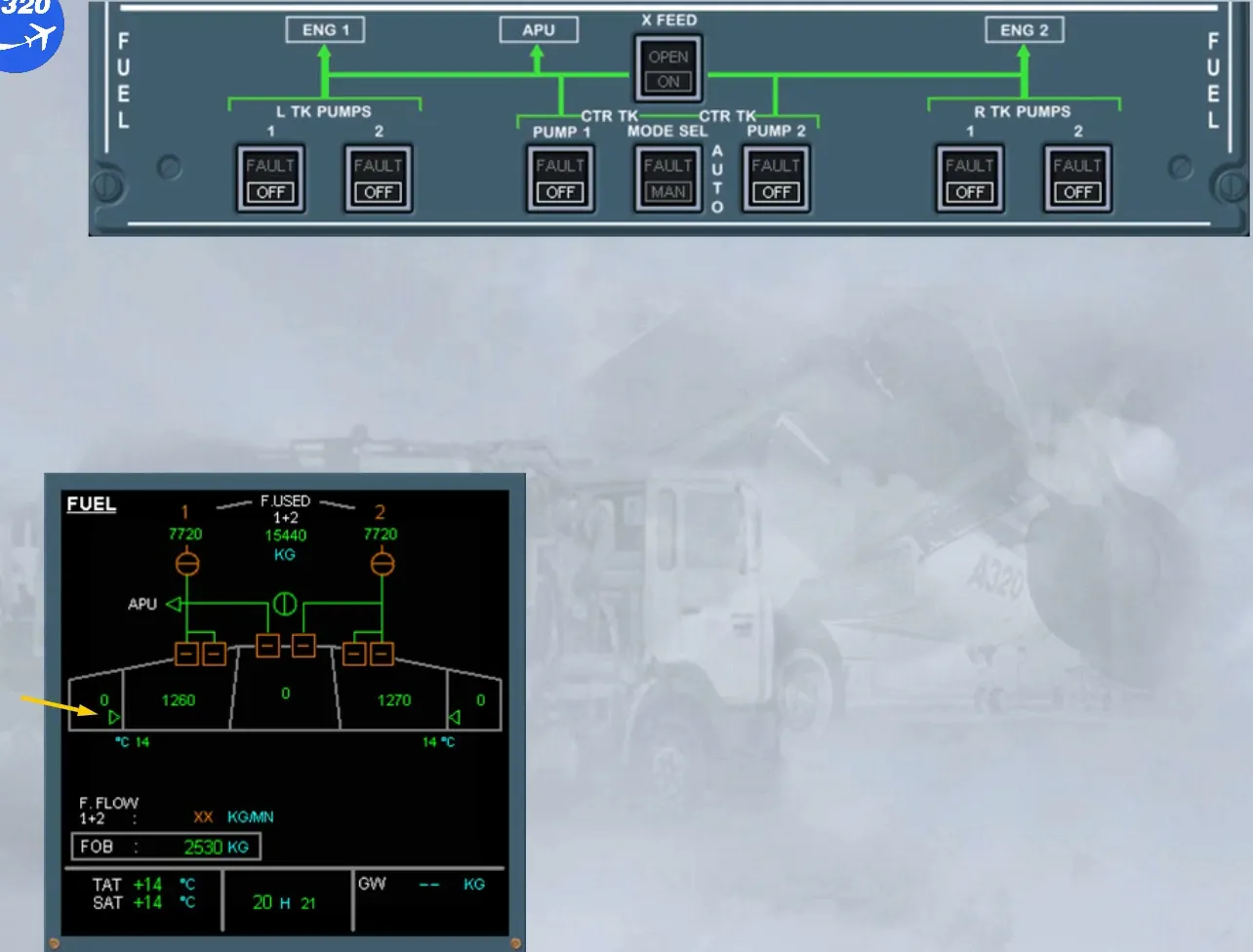
Observe the transfer valves remain open.
They will be automatically closed during the next refueling operation.
Module Completed