Lights Operation
During the walk around, the condition of the external lights needs to be checked.
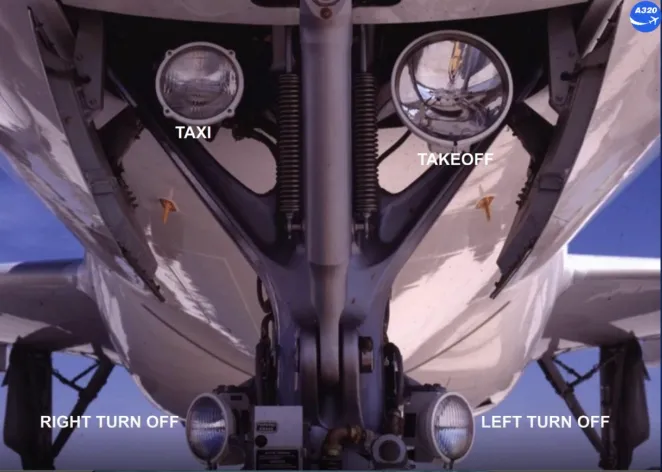
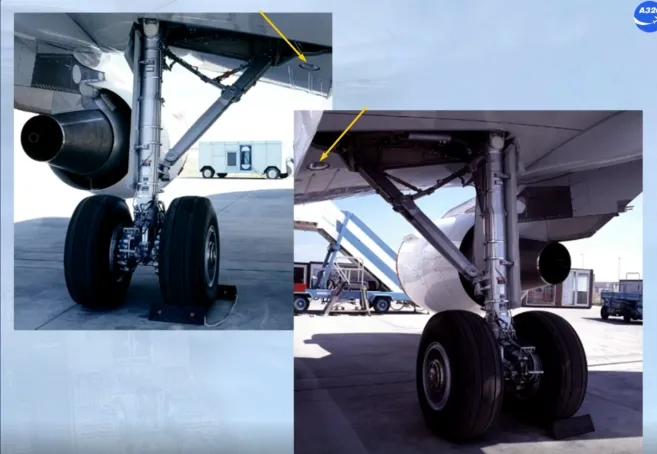
The first lights to be checked, are the lights installed on the nose landing gear.
The TAXI light is at the top, on the right hand side of the gear strut.
The TAKEOFF light is on the opposite side.
TURN OFF lights are attached onto the lower part of the strut.
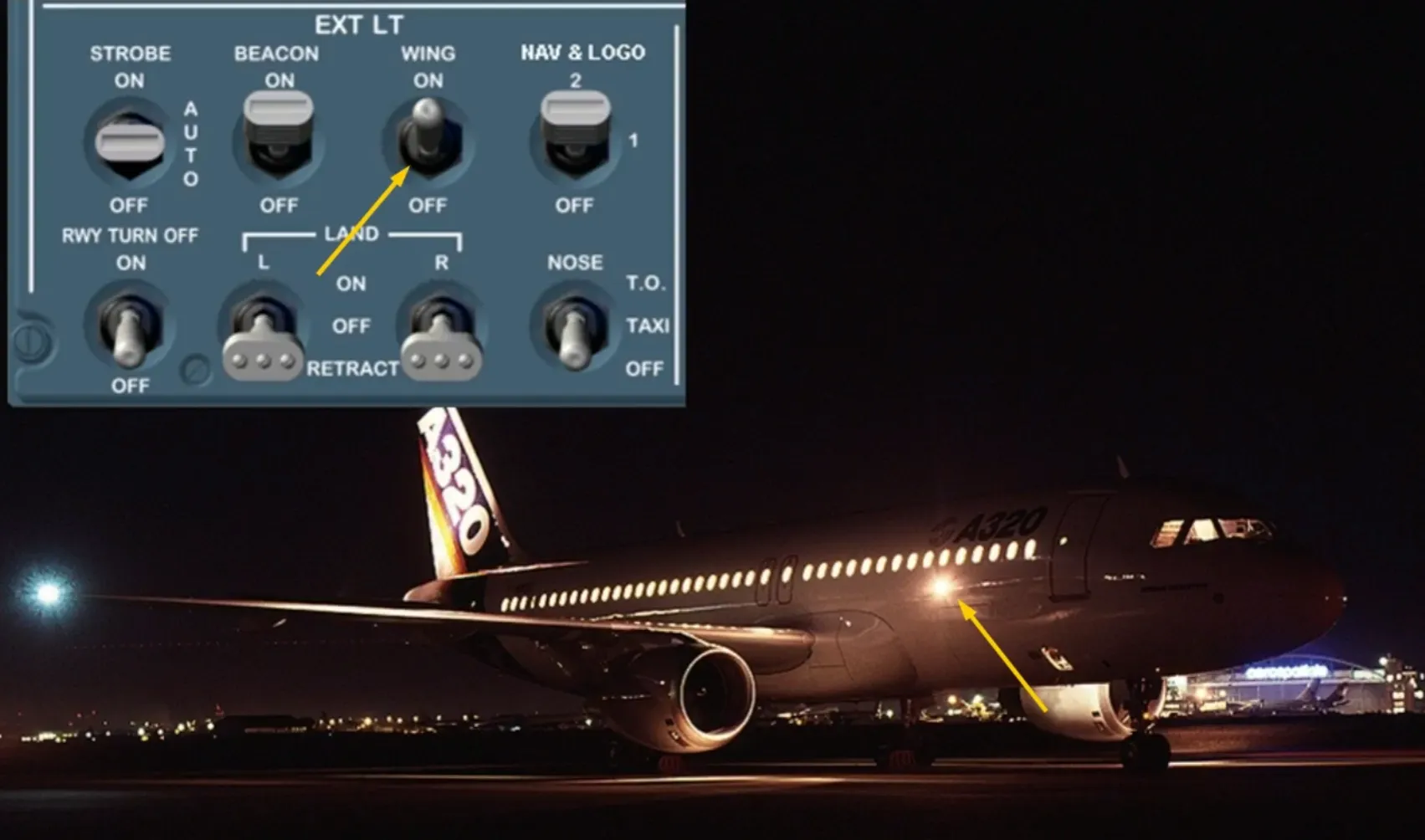
A wing light is fitted on each side of the fuselage.
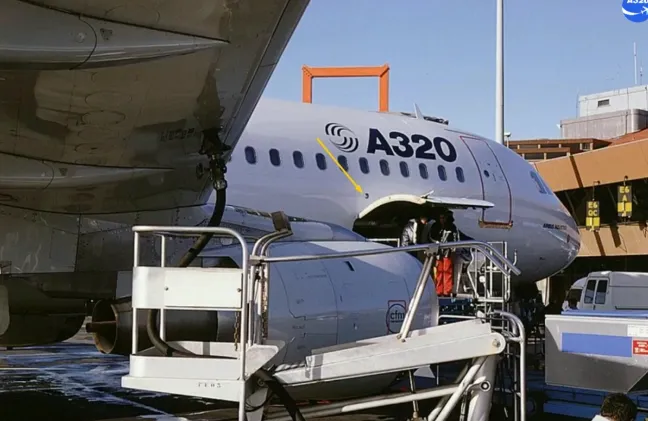
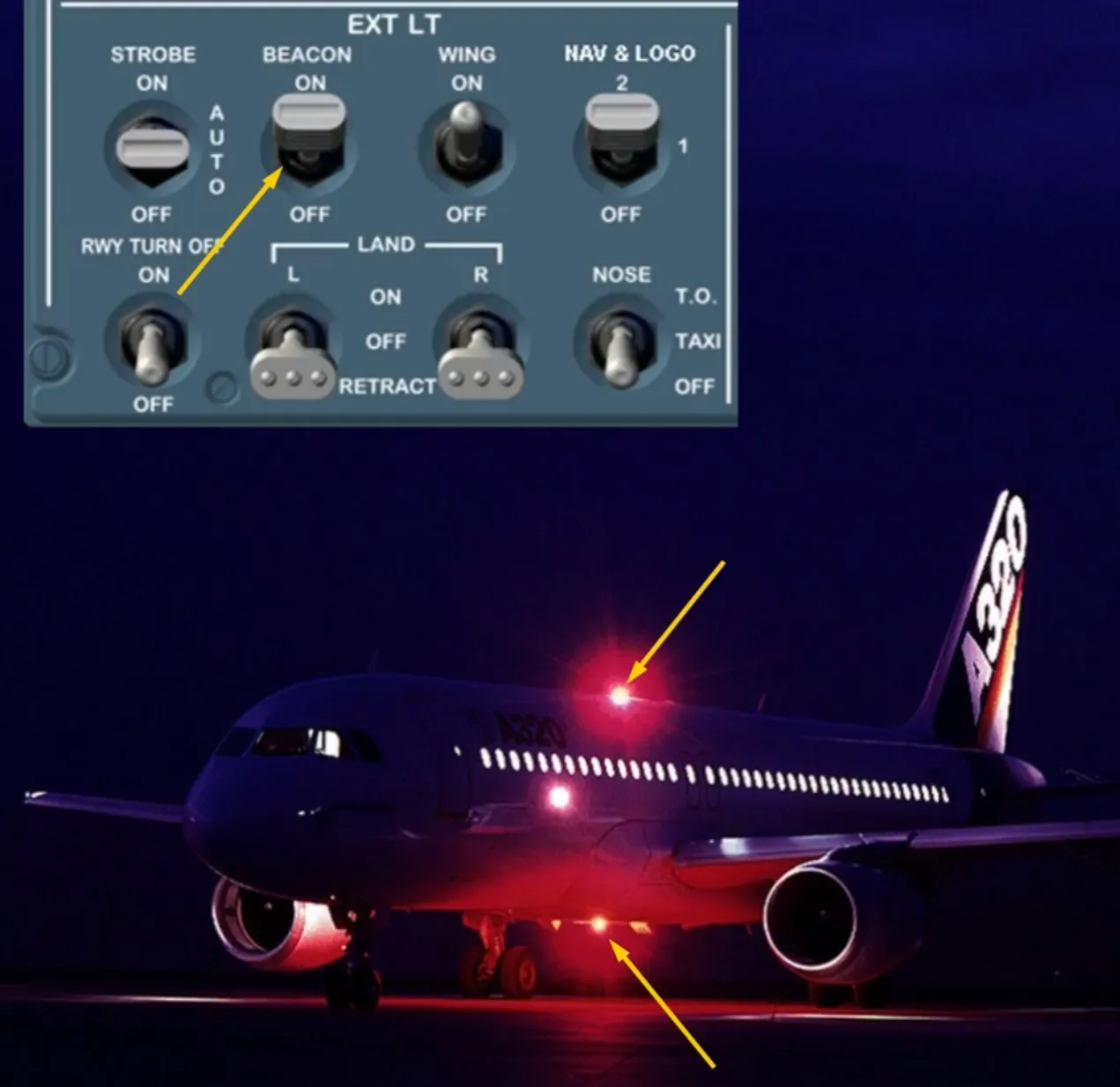
Two red beacon lights are installed, one on the top of the fuselage and one on the lower center fuselage.
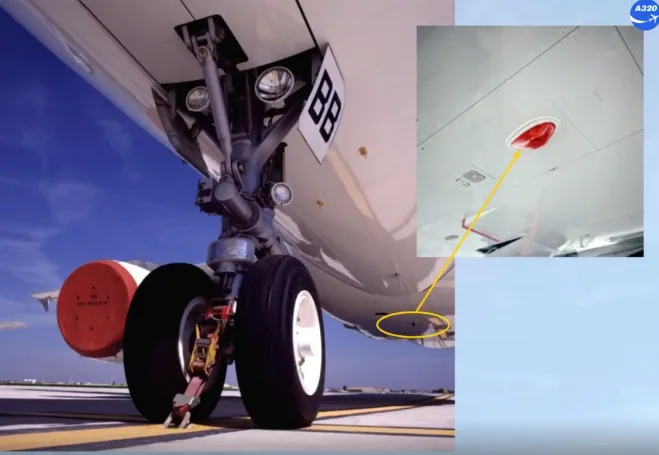
A landing light is installed under each wing, near to the main landing gear well. The lights are in their normal retracted position.
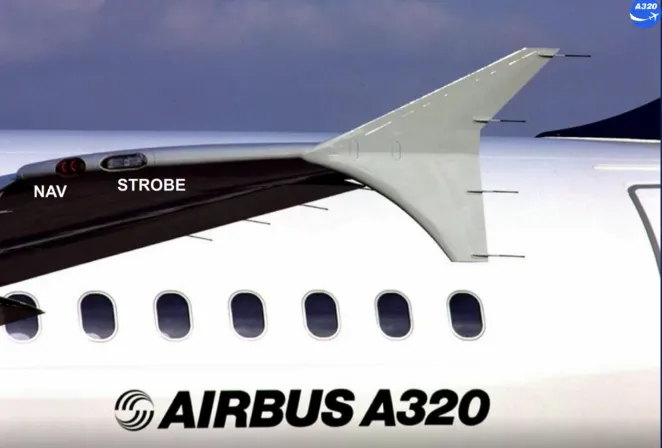
Two sets of navigation lights and a strobe light are installed on each wing tip.
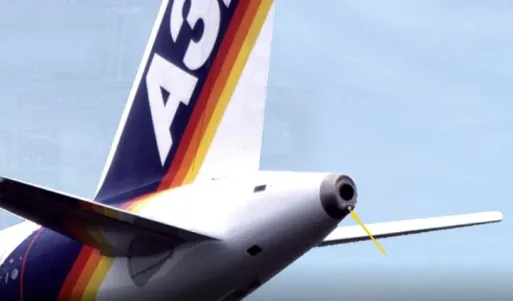
Just below the APU exhaust, there are two white navigation lights and a strobe light.
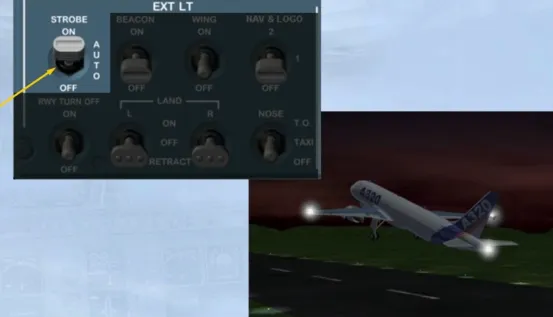
We shall now perform the cockpit preparation. The first lights to be set are the strobe lights.
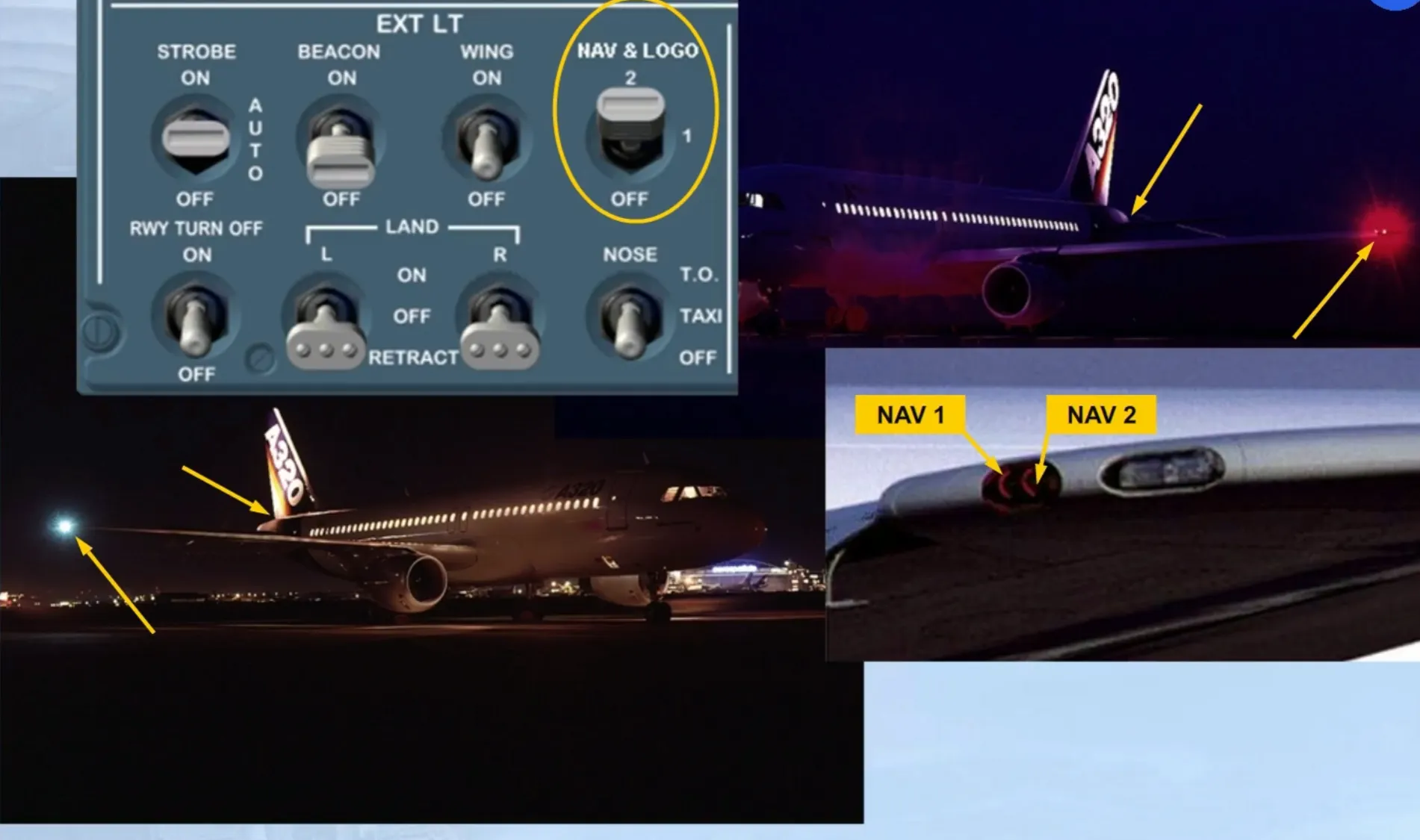
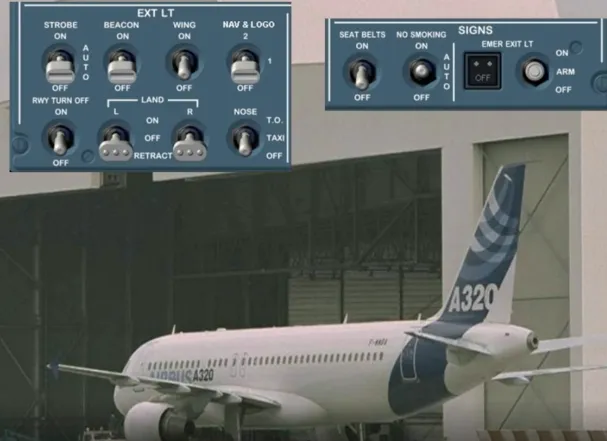
The STROBE sw controls the operation of the three white strobe lights.
It should be set to AUTO and so, the strobe lights will not come on as long as the main gear struts are compressed.
Note: It has to be set to ON when entering the runway for takeoff. It has to be set to AUTO, after landing when leaving the runway.
The NAV & LOGO sw controls the operation of the logo lights and two sets of navigation lights.
The logo lights are installed in the upper surface of each horizontal stabilizer to illuminate the company logo on the vertical stabilizer, provided the main gear struts are compressed or the slats are extended.
Position 1 turns the logo lights and first set of navigation lights on. Position 2 turns the logo lights and the second set of navigation lights on.
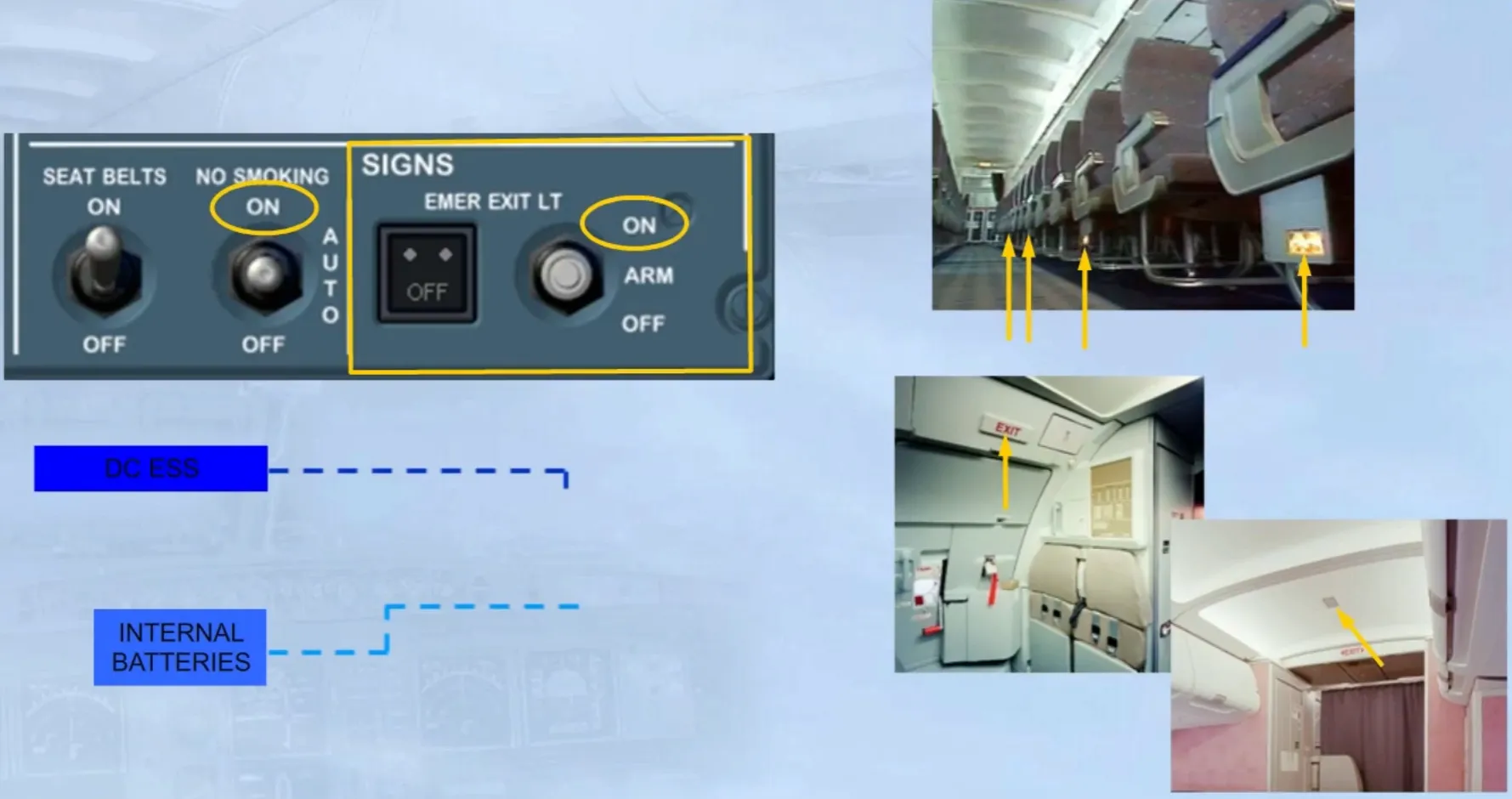
We will continue the cockpit preparation by setting the controls of the cabin signs.
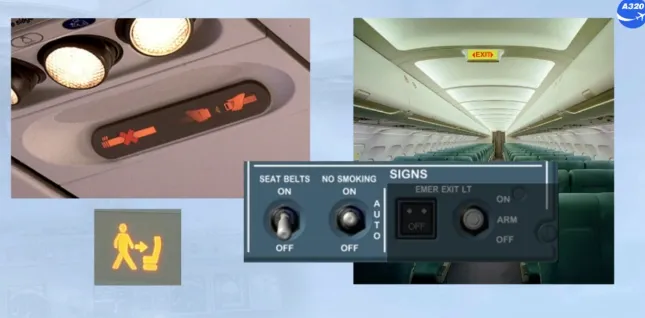
They are used to give instructions to the passengers such as “NO SMOKING”, “FASTEN SEAT BELTS” and “RETURN TO SEAT” in each lavatory.
These switches should be set to ON and to AUTO.
Note: The AUTO position causes the “NO SMOKING” and all “EXIT” signs to come on when the landing gear is extended and to go off when the gear is retracted.
A low tone chime sounds in the cabin when the signs come on and go off.
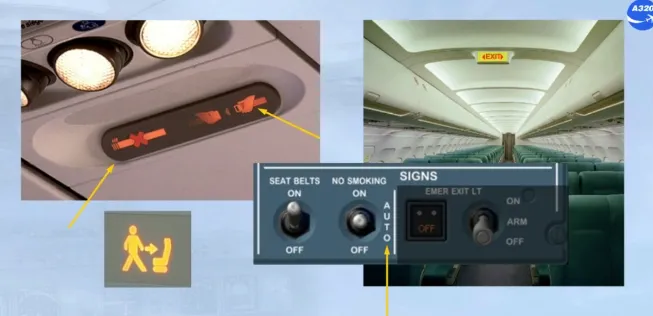
When an excessive cabin altitude is reached, the “NO SMOKING”, “FASTEN SEAT BELT”, “RETURN TO SEAT” and “EXIT” signs come on automatically regardless of the SEAT BELTS and NO SMOKING selectors positions.
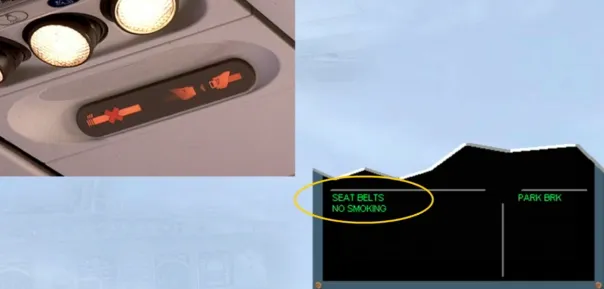
When the “SEAT BELTS” signs are ON or the “NO SMOKING” signs are ON, an associated memo message appears on the E/WD.
The emergency lighting has an:
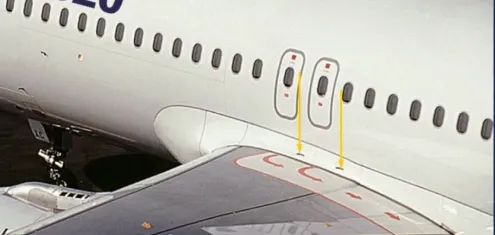
- Over wing escape route lighting
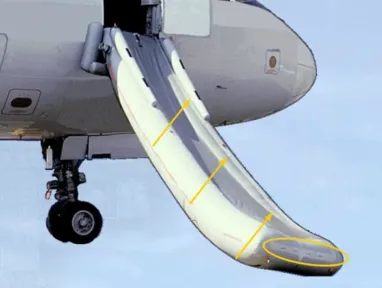
- Escape slide integral lighting
- EXIT signs
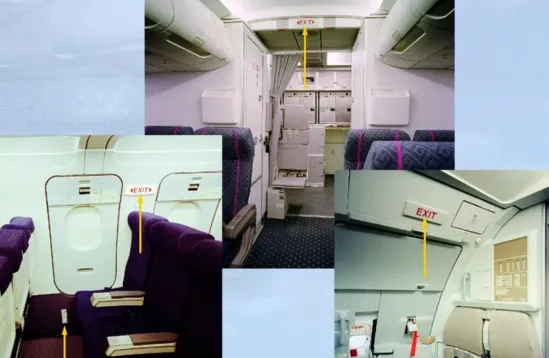
- Overhead emergency lights
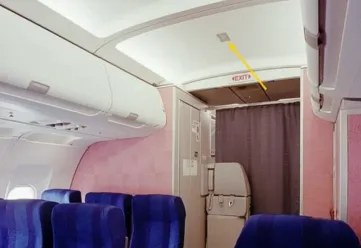
- Floor escape path lighting system.
Two different systems are available. Either lighted bands on the cabin floor or lights installed on the seat sides. An aircraft can be equipped with either system.
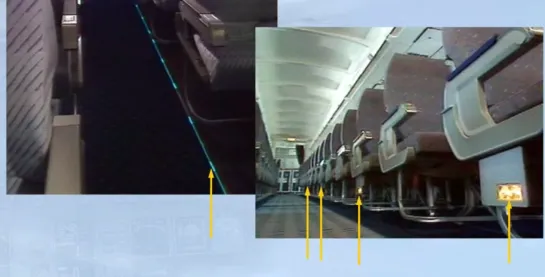
The EMER EXIT LT selector has three positions.
In the OFF position, the escape path lighting, EXIT signs and overhead emergency lighting are off and the EMER EXIT LT OFF light is amber.
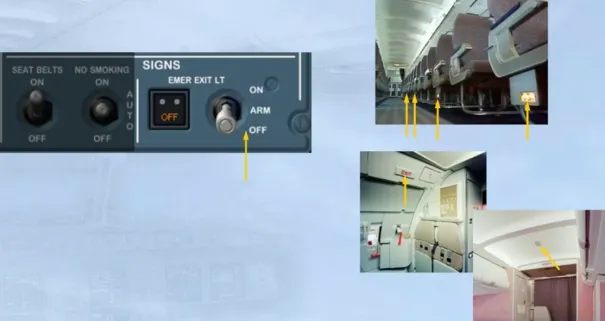
The ARM position is the normal setting.
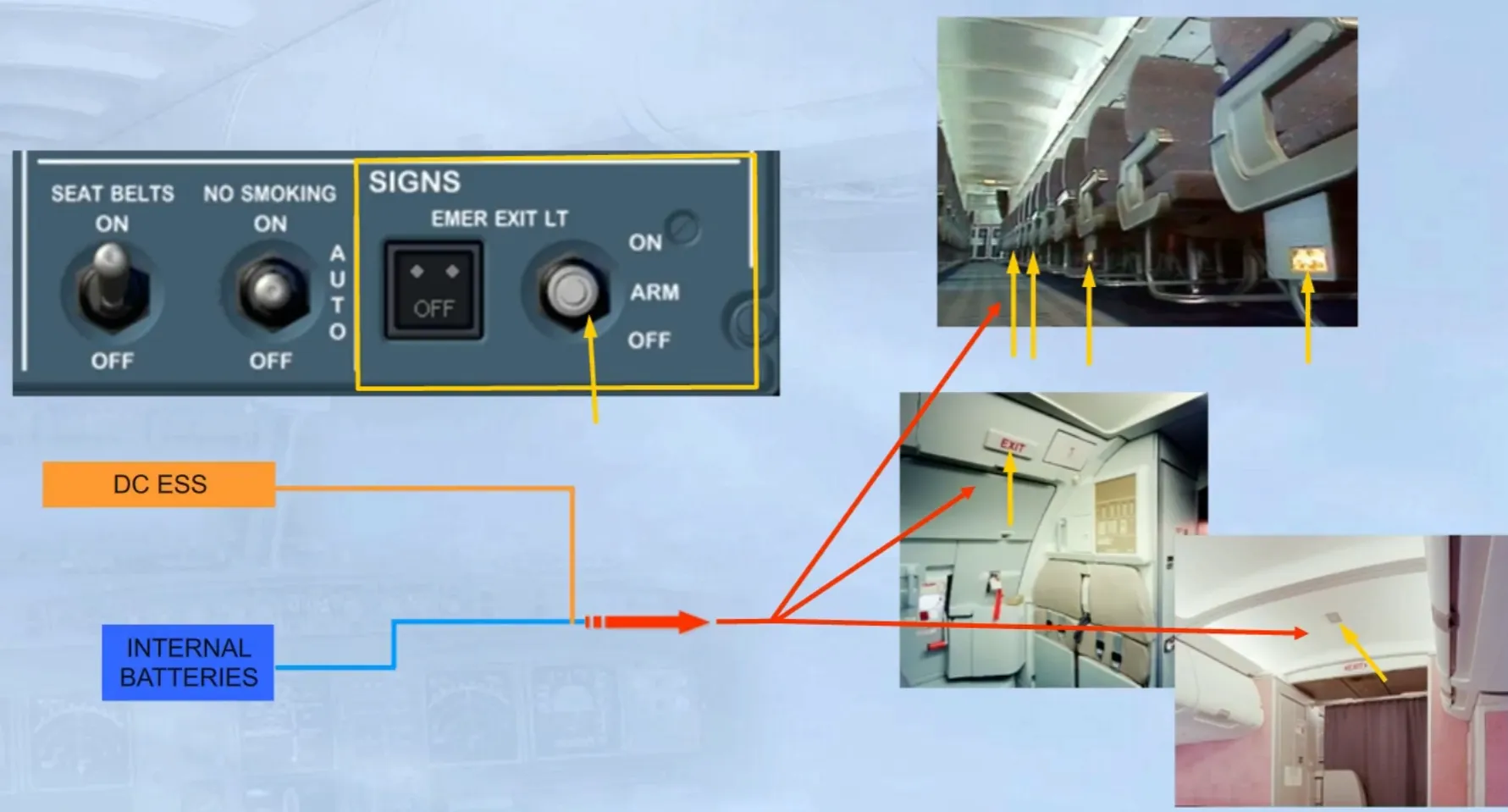
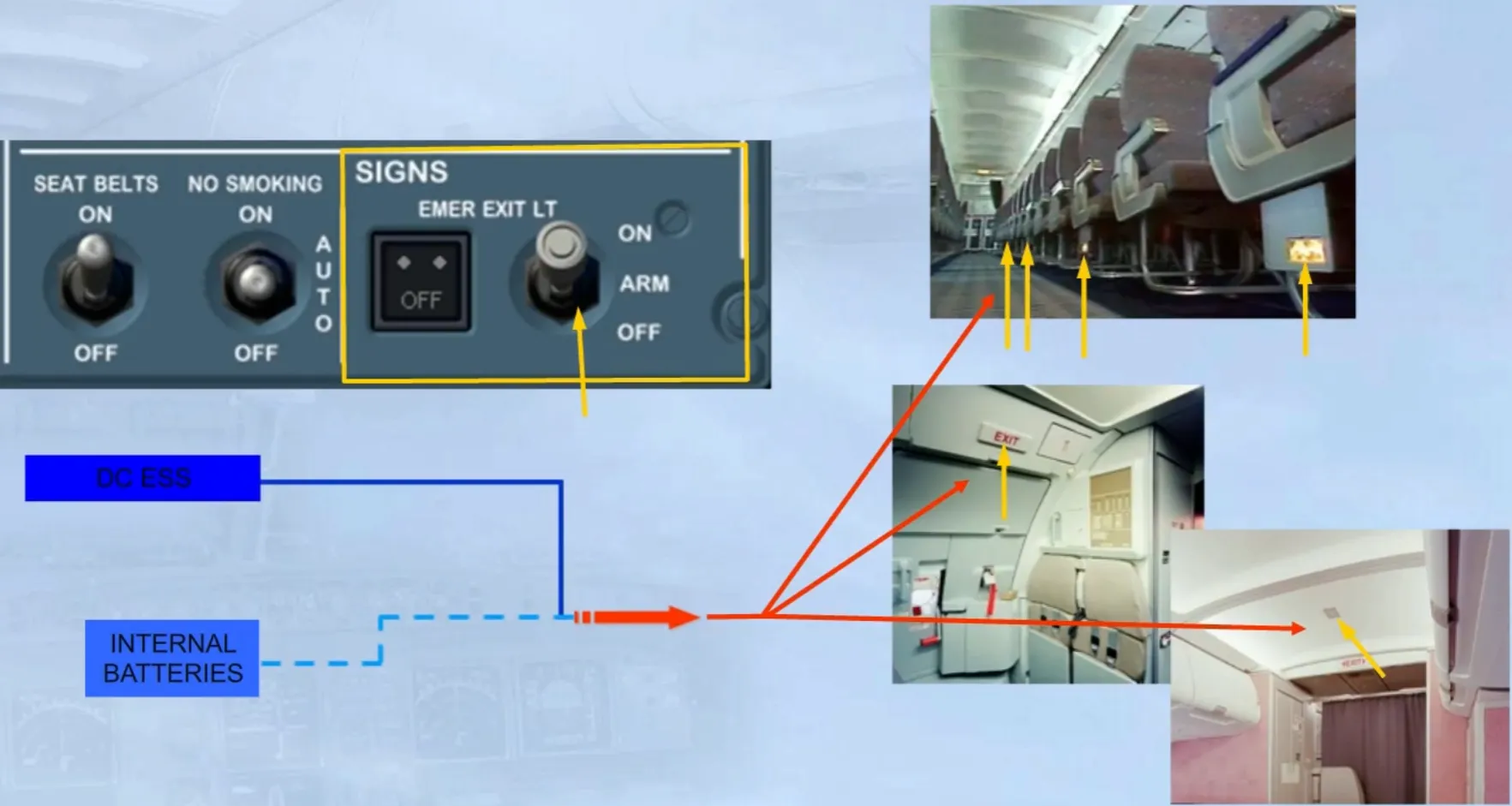
In this position, the floor emergency escape path lighting, the EXIT signs and the overhead emergency lighting automatically come on if the normal aircraft electrical power system fails and are supplied from DC ESS bus or from internal batteries if the DC ESS power fails.
In the ON position, the emergency lighting system comes on regardless of the electrical supply status.
Note: Internal batteries for the emergency lighting system are only charged by the DC ESS system. But they are not charged if the EMER EXIT LT selector is in ON position, or if the normal AC power or the DC ESS power fails, or if the NO SMOKING selector is in ON position.
The next steps are to switch on the various external lights.
Before pushback and engine start, the beacon lights are switched on.
The BEACON sw controls the operation of the two red beacons.
The WING sw controls the operation of the two wing lights.
These lights illuminate the wing leading edges and the engine air intakes for ice detection.
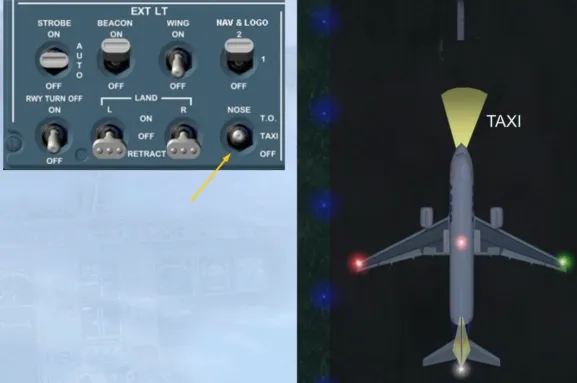
For taxiing, the nose lights are switched on at both daytime and nighttime.
The NOSE sw controls the operation of the taxi and takeoff lights.
The T.O position turns the takeoff and taxi lights on.
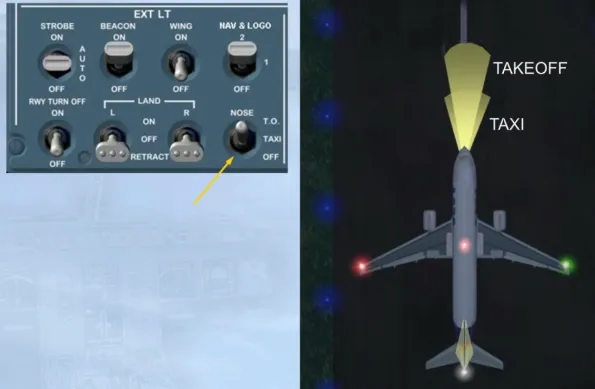
The TAXI position turns only the taxi light on.
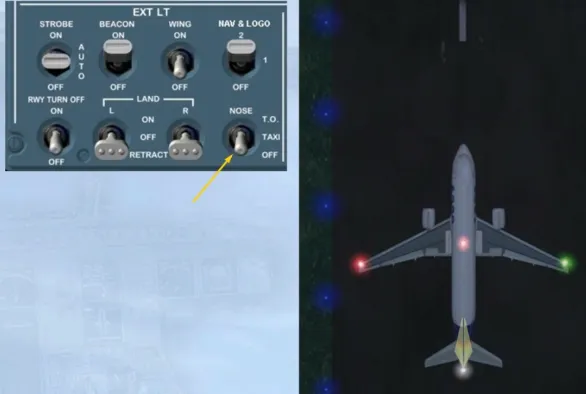
The OFF position turns both lights off.
Both lights go off automatically when the landing gear is retracted.
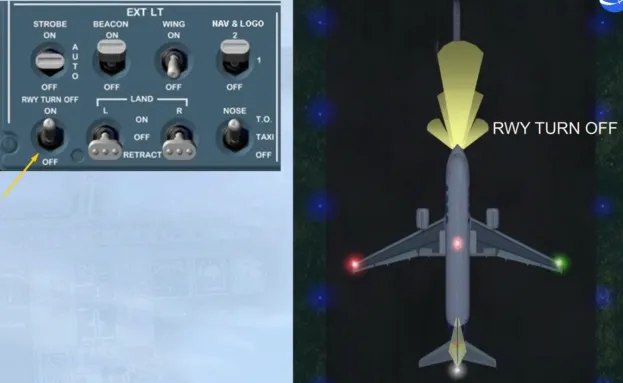
The RWY TURN OFF sw controls the operation of the runway turnoff lights.
These lights go off automatically when the landing gear is retracted.
Before takeoff, the RWY TURN OFF and LANDING lights are turned on in order to minimize bird strike hazard.
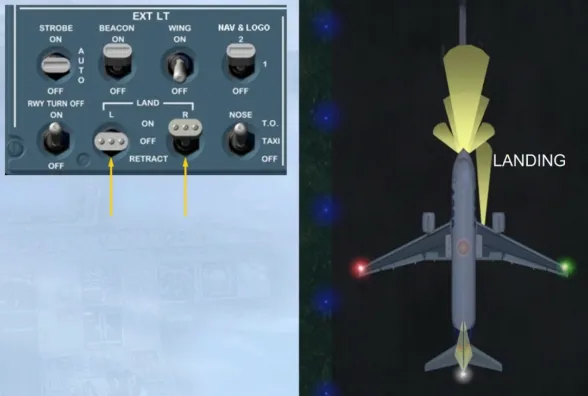
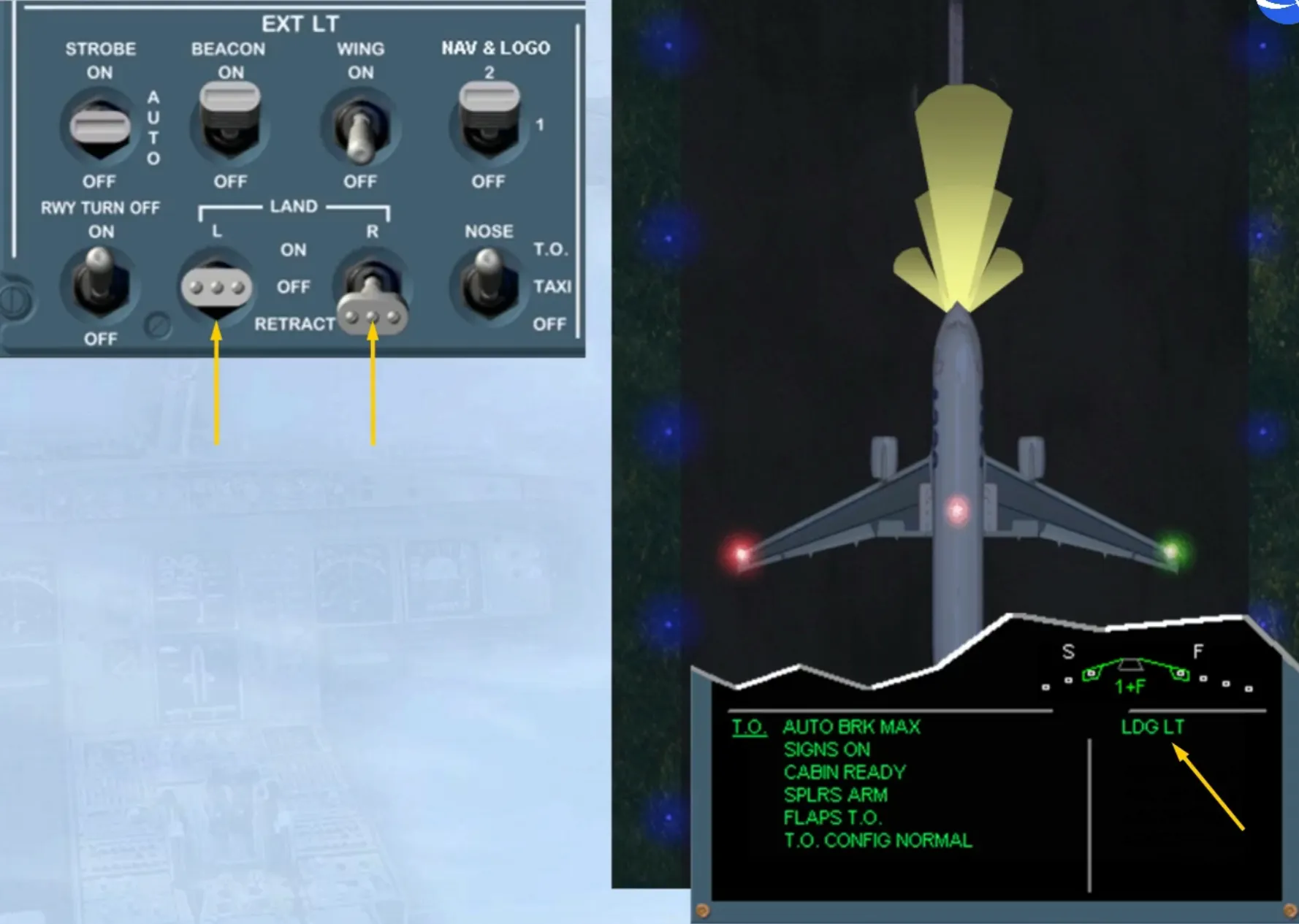
The landing light selectors which are labeled LAND, control the operation of the left and right landing lights.
The ON position causes the extension of the related light which comes on automatically when fully extended.
Note: The OFF position causes also the extension of the related light but it does not come on.
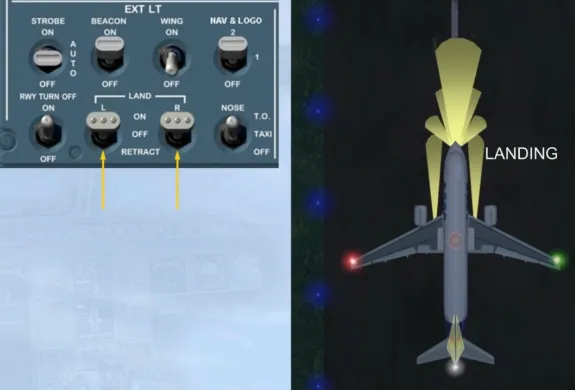
When at least one landing light is extended, on the E/WD, the LDG LT memo message is displayed in green.
But, before takeoff they should be set to ON, and before entering the runway, the STROBE sw must be set to ON.
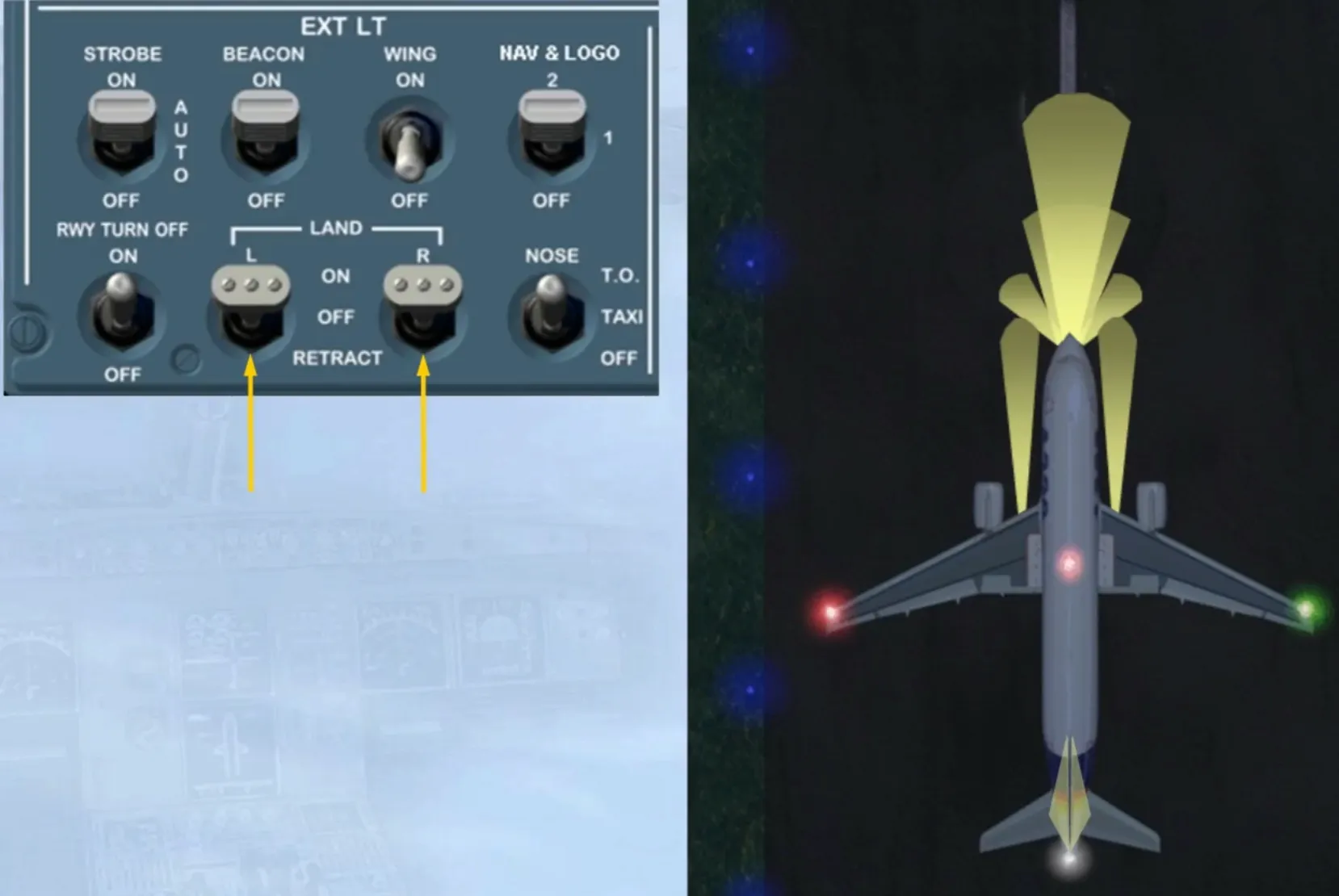
After takeoff, when the landing gear is retracted, the following lights go off automatically:
- The RWY TURN OFF lights
- The NOSE T.O and TAXI lights.
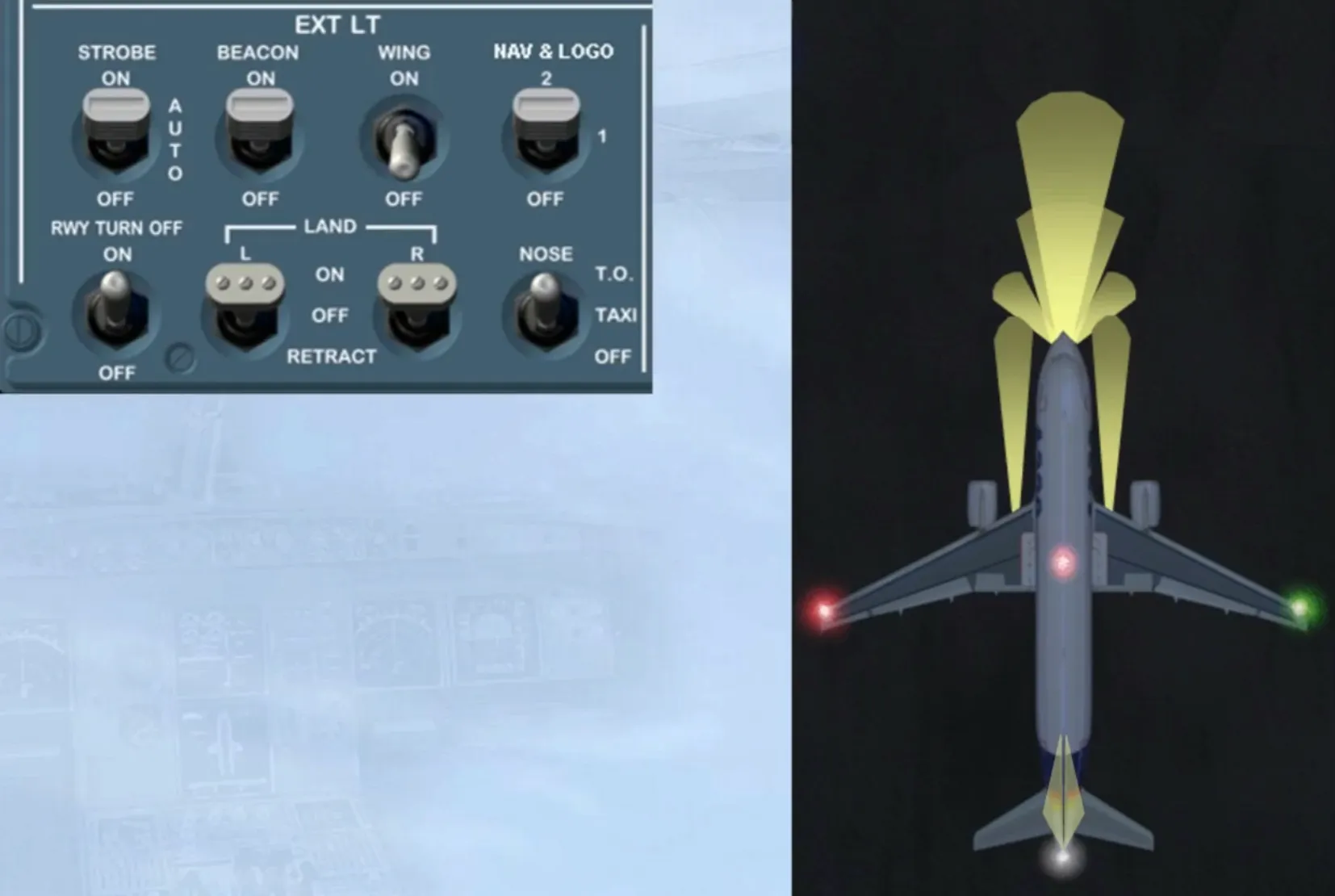
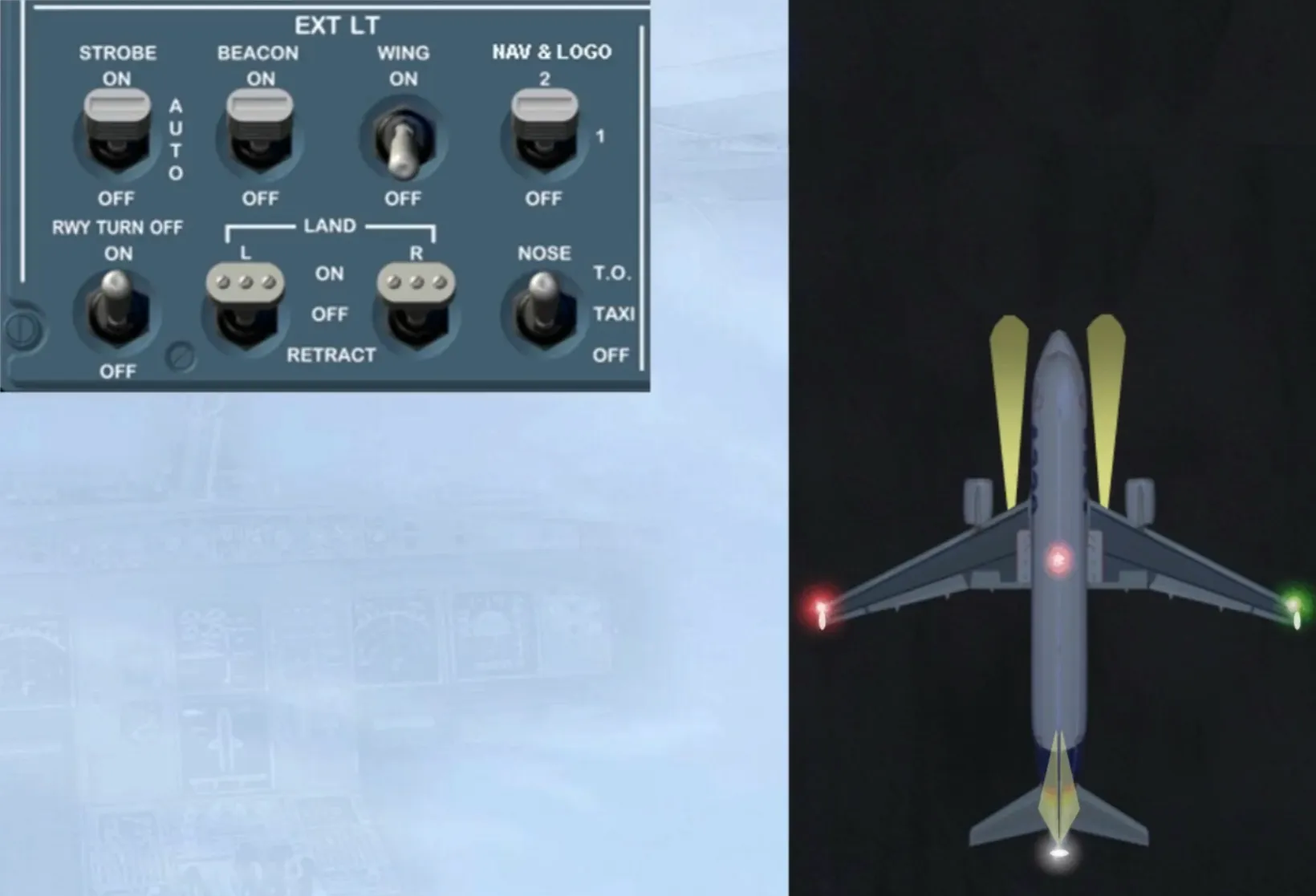
Then the related switches must be set to OFF.
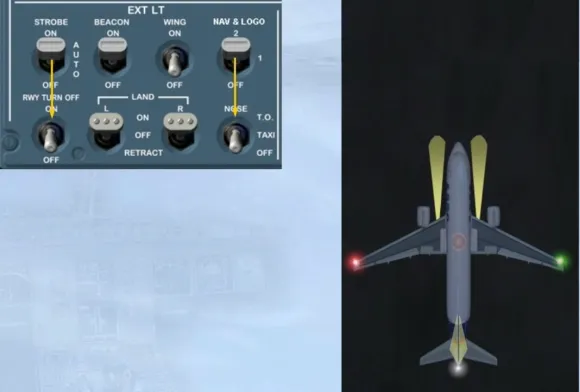
Note: The LAND lights may be left to ON, according to the airline policy or regulatory recommendation.
When the slats are retracted:
- The LOGO lights go off.
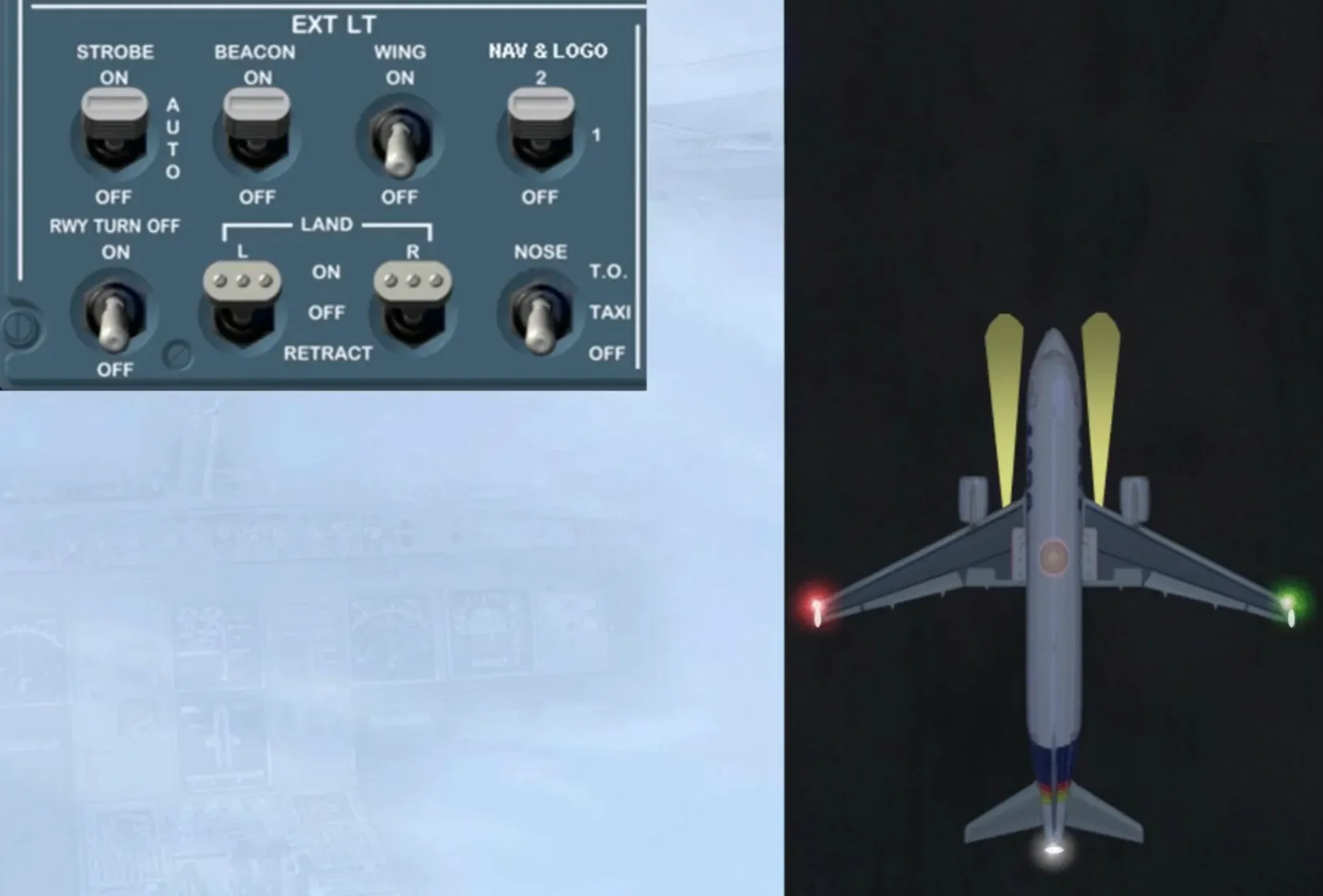
In flight the landing lights can be left extended (ON or OFF) as there is no limitation. But if not required by airline policy or by regulatory recommendation, when flying above 10 000 ft, the LAND selectors can be set to RETRACT position.
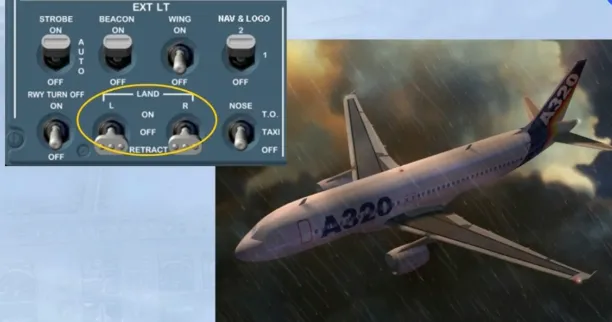
In flight, if the STROBE sw is set to OFF, on the E/WD, the STROBE LT OFF memo message is displayed in green.
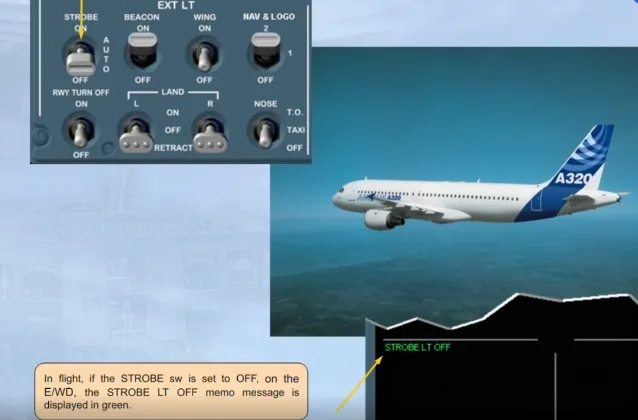
During approach, when FLAPS are at CONF 2, on the EXT LT panel:
- The NOSE sw is set to TAXI
- The RWY TURN OFF sw is set to ON and
- The LAND selectors are set to ON, if not already set.
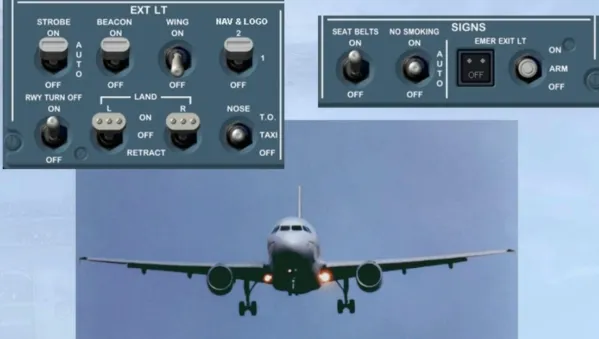
Then, after landing and leaving the runway:
- The STROBE sw must be set to AUTO
- The LAND selectors, if not required, may be set to RETRACT.
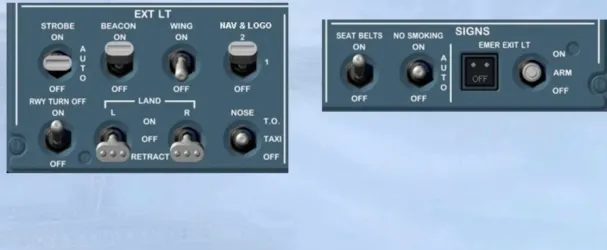
Then, at parking and after all engines have spooled down:
- The BEACON sw must be set to OFF
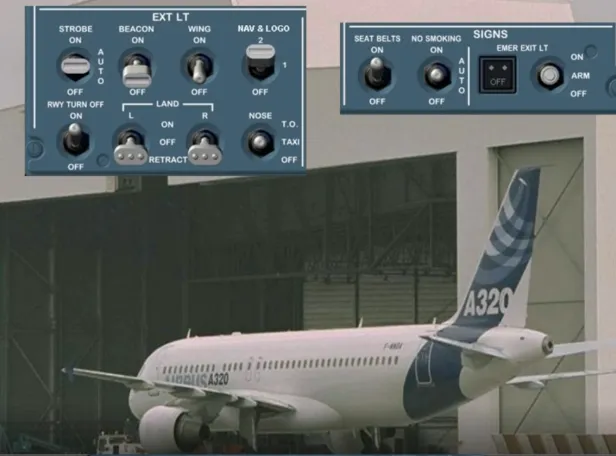
- If not required, all EXT LT switches can be set to OFF
- The SEAT BELTS sw has to be set to OFF.
And before leaving the aircraft, on these panels all switches must be set to OFF.
Note: If external power remains supplying the electrical network, setting the NO SMOKING sw to OFF allows the emergency internal batteries to be charged.
Module completed